
BLOG: APPLIED RESEARCH OF EMMANUEL GOSPEL CENTER
Exploring Church Spaces: Managing Church Buildings, Property Assets
Ten practical, hard-earned lessons from church leaders on avoiding costly property mistakes: from hiring the right professionals and building strong financial systems to reviewing leases and protecting core ministry assets from over-leverage.
Photo credit: design-beast via Lightstock
Exploring Church Spaces: Managing Church Buildings, Property Assets
Ten practical tips for avoiding key pitfalls.
by Saranya Sathananthan, Researcher in Residence
Church leaders often talk about property in terms of mission: how a building can serve its neighbors, support new ministries, and generate revenue that sustains operations. Those possibilities are exciting to dream about and discuss. But across our interviews, some of the most important lessons leaders shared about protecting that mission were not grand or pie-in-the-sky. They were far more practical.
In the Exploring Church Spaces project, we asked church leaders what they wish they had done differently in managing their church buildings and property assets. Their answers were honest and sobering, advice intended to help other churches avoid the painful and often demoralizing challenges that their churches experienced. Many of these hard-earned lessons came from decisions, agreements, or systems that became costly over time, sometimes affecting a church’s financial health and constraining its ministry capacity for years. Churches talked about leases that locked them into decades of financial loss, unclear agreements that strained relationships, maintenance issues that threatened their ability to host and leverage their space, and financial systems that were not strong enough for the complexity of grants, rentals, renovations, and capital projects.
Though they aren’t the strategies that are primarily about innovation, creative programming, or bold new uses of space, they may be some of the most important for keeping churches stable and running effectively for the long haul. They are preventative in nature, focusing on the systems and safeguards that keep churches from losing money, trust, and mission capacity.
At their core, these practices are about stewardship: how churches care for what God has entrusted to them. A church building is often one of the most valuable and generative assets a congregation holds, yet when churches lack strong legal, financial, administrative, and facilities systems, they can unintentionally harm themselves, their tenants, their partners, and the mission they are trying to serve. The good news is that many costly mistakes can be prevented by putting some of these basic practices in place early, before signing contracts, making rental agreements, receiving grants for new initiatives, or entering into large capital projects.
1. Hire professionals for work that must be done professionally.
Many churches operate relationally and rely heavily on volunteers to get things done. A church member may have professional experience, or someone may know a professional who is willing to help at a reduced rate. This can be a real gift to churches, but it can also create confusion if expectations are not set clearly.
“We were so spiritually minded, we were business-foolish and managerially incompetent, and we suffered for that.”
Some church work can be done by volunteers. But some work is just too important, too technical, or too risky to depend on a volunteer-work structure. When churches are managing multiple or large grant-funded projects, major renovations, historic preservation, leases, property acquisitions or sales, tax questions, and other high-stakes processes, informal volunteer systems can quickly become inadequate. In these cases, the issue is not whether volunteers are trustworthy or capable. The issue is that volunteer help often happens around other jobs, family responsibilities, ministry commitments, and limited time. When the stakes are high, the church needs reliability, accountability, and clear responsibility.
Without that structure, churches can miss important deadlines that keep projects moving forward; communicate poorly with funders, contractors, or other partners who expect follow-through; delay important decisions; keep financial records that are not strong enough for audits or grants; sign contracts that expose the church to long-term liability; or damage trust with partners, tenants, and public agencies. These mistakes can cost the church money, support from others, and public credibility, closing the doors for future opportunities.
One church leader put it bluntly: “We were so spiritually minded, we were business-foolish and managerially incompetent, and we suffered for that. We failed to secure appropriate resources like finding a lawyer to help us and an accountant. We should have done that a long time ago. It would have saved us a lot of mess.”
This does not mean churches cannot receive help from volunteers or members with professional expertise. It means the church should be clear about what kind of help it is offering. Is the person giving informal advice? Occasional volunteer help? Discounted professional services? Or taking full professional responsibility for a critical piece of work? The more responsibility required, the more a church should consider creating a written agreement or memorandum of understanding that names the scope of work, timeline, deliverables, communication expectations, decision-making authority, compensation, and what happens if the work is delayed or incomplete.
Churches sometimes feel guilty holding people accountable, especially when they are helping for free or at a reduced rate. But if the work matters, the expectations need to be clear regardless.
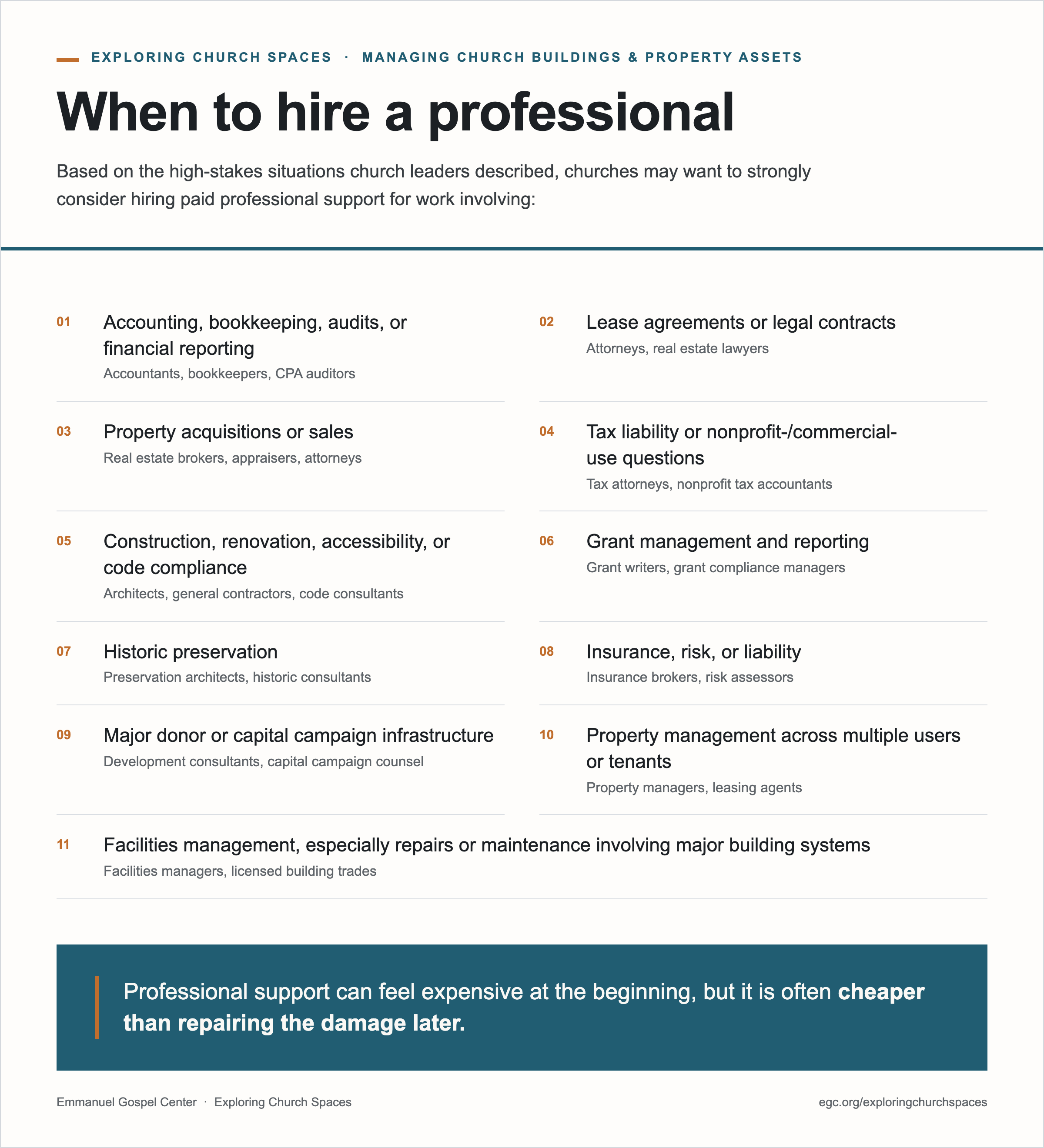
When to hire?
Based on the high-stakes situations church leaders described, churches may want to strongly consider hiring paid professional support for work involving:
accounting, bookkeeping, audits, or financial reporting
lease agreements or legal contracts
property acquisitions or sales
tax liability or nonprofit-/commercial-use questions
construction, renovation, accessibility, or code compliance
grant management and reporting
historic preservation
insurance, risk, or liability
major donor or capital campaign infrastructure
property management across multiple users or tenants
facilities management, especially repairs or maintenance involving major building systems
Professional support can feel expensive at the beginning, but it is often cheaper than repairing the damage later. One leader emphasized that churches should not be afraid to invest in consultants and coaches. Their organization had spent significant money on outside expertise, but saw it as part of what made larger funding opportunities possible. For example, securing a major multimillion-dollar project required substantial upfront consulting costs, some of which were structured to be paid through the project rather than directly by the church.
Churches should also account for paying people for work that requires professional skill and responsibility. If the church needs the work done well, on time, and with accountability, it should be treated as a professional service, even when the provider cares about the church or offers a reduced rate. A discount can be a gift, but it should not replace fair compensation, clear expectations, or professional standards.
2. Build strong accounting and financial reporting systems.
If a church wants to receive grants, manage multiple revenue sources outside of tithing, or take on building projects, it needs financial systems that can withstand outside scrutiny. Good financial systems are not just for internal decision-making; they also matter when funders, lenders, auditors, partners and investors, tenants, contractors, or public agencies need to understand how money is being managed.
Separate operating funds, building funds (including rental income and building expenses), restricted grants, and capital project funds. When accounts are mixed together, it becomes difficult to know what money belongs where, what funds are restricted, and how to report expenses accurately. Some funders may also require restricted project funds to be kept in a separate account from church operating funds or other grant-funded projects. Churches should decide what belongs in each budget or account and apply those categories consistently.
Require regular financial reports. A church should be able to provide a clear financial report when needed for internal review, funder reporting, grant applications, or major project planning. Profit and loss statements, project budgets, grant reports, and, when relevant, 990s for a separate nonprofit entity should be clear and easy to interpret. Line items should be specific enough that outside reviewers do not have to guess what they mean or wonder whether expenses are being categorized appropriately.
Use bookkeeping software consistently. Several churches described situations in which software had been purchased but was not used consistently, or in which financial information was tracked in multiple places and in different ways. That makes it much harder to reconcile accounts, prepare reports, or understand the church’s actual financial position. It is worth the time to set up the system properly, get professional help if needed, provide training on how to use it, and maintain it regularly.
“If I could do it all over again, my first hire would be an accountant before a personal assistant.”
One church leader described a situation in which different financial systems had developed over time: one for treasury, another for operations, and another for investments, without enough oversight between them. The problem became clear when a grantmaker requested a financial report, and the church had to confront the need for stronger accountability and an integrated, unified financial system.
Build in checks and balances. Financial management should not depend on only one person. Even when a church has a trusted treasurer, bookkeeper, or operations director, there should be regular reviews by a finance team, board, or outside accountant. Clear roles, shared reporting, and periodic review help prevent confusion, accidental mismanagement, and the appearance of impropriety. They also protect the person handling the finances by ensuring they are not carrying responsibility alone.
Pay for bookkeeping or accounting help before finances become too complex. Many churches have volunteer treasurers or members who help manage the books, and that may work for a simple church operating budget. But it is usually not enough when a church is managing major capital projects, multiple grants, rental income, property expenses, restricted funds, or several accounts. As one church leader reflected, “If I could do it all over again, my first hire would be an accountant before a personal assistant. They would have saved us so many headaches.”
Paying for bookkeeping or accounting support can prevent confusion, accidental mismanagement, delays, and reporting problems that could jeopardize thousands of dollars in funding. A few hundred dollars a month for reliable bookkeeping may save the church from losing far more in missed opportunities or broken trust with funders.
Prepare for funder expectations, even if churches are not legally required to file the same reports as nonprofits. Some funders ask for audits, financial statements, or 990s, even if churches are exempt from certain filing requirements. In some cases, the ability to provide strong financial documentation can make the difference between receiving or missing out on significant funding. Financial transparency should not be something churches fear. Accountability, integrity, and clear stewardship are part of the witness of the church.
3. Bring legal counsel in before signing agreements.
Several churches we interviewed experienced significant challenges with long-term lease agreements, especially cell tower leases. When churches were first approached by cell companies, many leases locked in churches for 30 or 40 years. For churches that needed cash for repairs or building improvements, the upfront revenue was appealing. However, when the tax laws changed during the life of the lease, the commercial use of church property triggered property tax liability.
Because the contracts did not clearly protect the church, that liability fell back on the congregation. Though churches received upfront revenue through those deals, it ultimately ended up costing churches thousands of dollars a year, and for some who were not able to work their way out of that liability, it cost them hundreds of thousands over the life of the lease. In those cases, the long-term costs outweighed the income the church received when it first signed the agreement.
“The factor that has hindered us most is ignorance. In our system, we are driven from a religious perspective based on a religious organization, and we were not oriented around business or management.”
Do not sign major agreements without legal review. Churches should have a lawyer review long-term leases, cell tower agreements, tenant leases, construction contracts, purchase and sale agreements, easements, financing documents, and any agreement that could affect the church’s property, tax status, liability, or long-term control. Legal review is essential, but it does not replace ongoing oversight.
In one church, a lease had been reviewed by a legal team, but when the leasing company reduced its payments, no one caught the change for ten months. The church only discovered it when preparing the annual budget. By then, the monthly payment had dropped by nearly $1,000, resulting in significant lost income. As the leader reflected, “I didn’t know what I needed to know. And other people didn’t catch it either.”
Be especially careful when negotiating with corporations or entities that have far more legal experience than the church. Corporations have attorneys drafting agreements to protect their own interests. If churches enter business arrangements, they need legal counsel to help them understand the risks and negotiate terms that protect the church.
One church leader reflected on how costly that learning curve can be: “The factor that has hindered us most is ignorance. In our system, we are driven from a religious perspective based on a religious organization, and we were not oriented around business or management.”
Another leader described the mindset shift churches need when entering more complex property arrangements: “If we want to play in the big leagues, then we need to elevate our level of gameplay. We are going to make mistakes, but we have to step our game up, or else they are going to run right over us. We have to be ready to elevate to that level of operating. Not every pastor is capable of that. So you need to have the right people.”
Together, these reflections point to the same lesson: churches do not need to abandon their spiritual mission, but they do need the right legal, financial, and managerial support when making high-stakes property decisions.
Build protections into the agreement. Where appropriate, agreements should include review points, rent escalators, termination clauses, clear tax responsibility, insurance requirements, maintenance responsibilities, and remedies for breach. These protections are aimed at mitigating changes that may occur over the life of a lease and make the difference between an agreement that supports the church and one that creates a long-term financial burden.
Do not assume a standard contract protects the church. Every agreement should be reviewed and revised for the specific circumstances being negotiated. The longer the agreement, the more important this becomes. A few thousand dollars in legal review at the beginning may save the church from decades of financial loss later.
4. Clarify tax liability.
A tenant’s business should not become the church’s tax burden. This was mentioned in the previous strategy, but it is important enough to be named separately.
In every lease agreement, churches should clarify who is responsible for any property tax triggered by commercial, for-profit, or non-exempt use of the space. One-time use of the building will usually not trigger this kind of liability, but even short-term space-use agreements should include basic language about responsibility for fees related to the user’s activities.
For more information on tax liability, read our Tax-Exemption Issues for Massachusetts Churches resource.
For longer-term leases, include language that addresses changes in tax law or municipal interpretation. If the arrangement depends on a tenant’s nonprofit status, require documentation of that status and update it as needed. Churches should also review whether uses such as cell towers, childcare centers, schools, offices, commercial kitchens, housing, or other income-generating activities could affect their property-tax exemption.
5. Know what your space costs.
Many churches want to be generous with their space. They may offer below-market rent to a nonprofit partner whose work aligns with the church’s mission, allow another congregation to rent at low cost, or let a community group use the building for free. Churches may also feel pressure not to charge market rates because of the pervasive perception that “churches are not in the business of making money.” While generosity can be a faithful witness, it needs to be balanced with what the church can realistically sustain, and it should be a decision the church makes intentionally, not on a whim or by default.
Sharing space creates real costs. Churches still have to pay for utilities, cleaning, staff time, administrative coordination, insurance, trash removal, repairs, security, supplies, wear and tear, snow removal, and future maintenance. When a group pays little or nothing, the church is subsidizing that use.
Calculate the real cost of building use. Churches should make an effort to obtain a basic understanding of what it costs to operate the building each month and what additional costs are connected to outside use. This helps leaders make informed decisions about rental rates, how much to discount or subsidize, and what they are willing to offer for free.
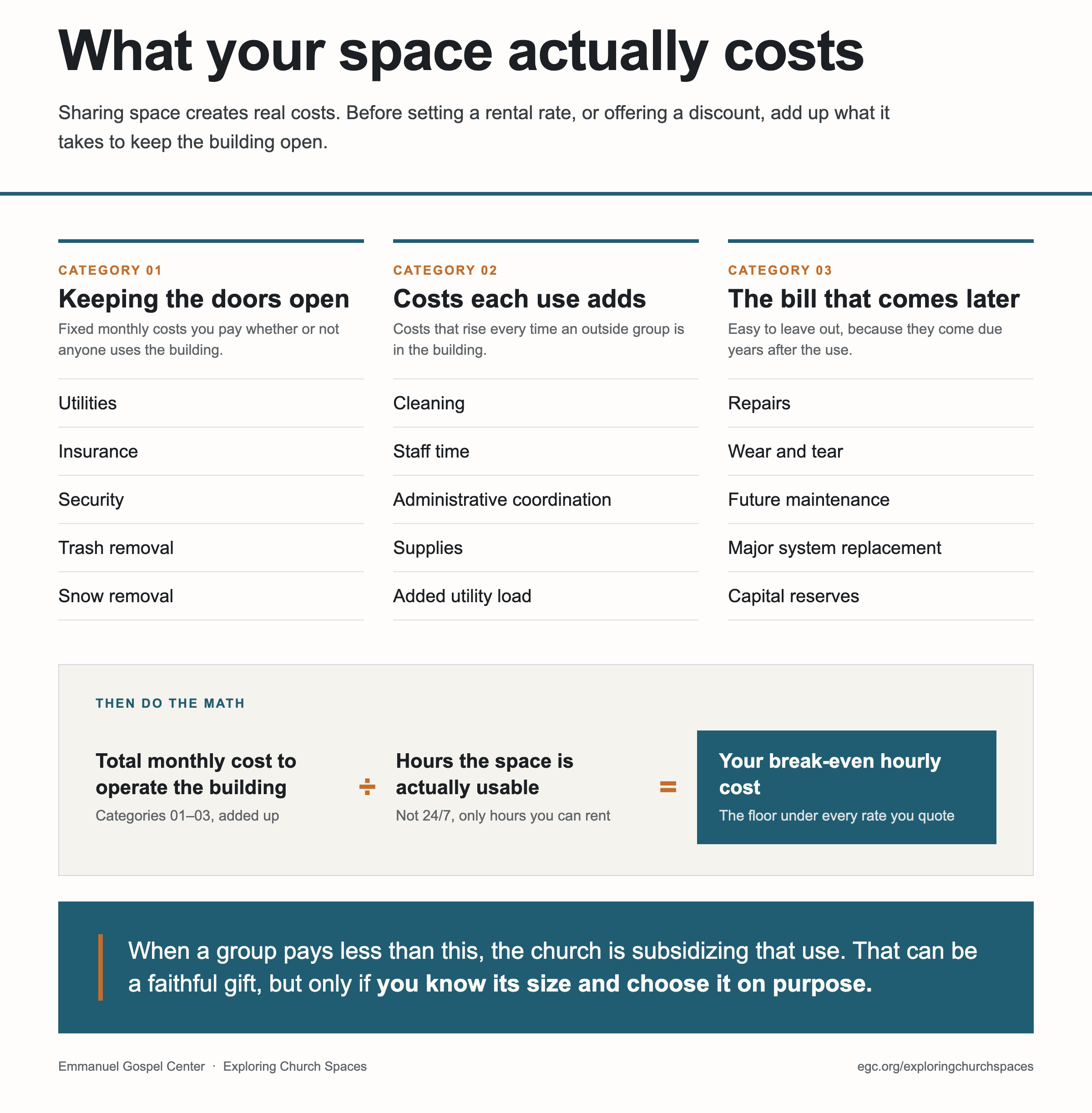
One church we interviewed takes this seriously by naming the actual rental price up front. If a group begins by asking for a discount, the church sees that as a sign that the group may not yet understand the value or cost of the space. The church may still choose to offer a discount later, but it first wants to know that the group understands the space’s value and is prepared to contribute fairly.
Decide intentionally which groups receive reduced rent or free use. Not every group that needs space can or should receive the same subsidy. Churches should decide which uses align most closely with their mission and what level of support they can realistically offer. This makes generosity intentional rather than accidental.
Name the subsidy as part of the church’s mission. If the church is offering space below cost, name that clearly. For example: “We are choosing to subsidize this use because it serves our neighborhood, supports another congregation, or aligns with our mission.” Naming the gift helps others understand that the reduced rent means the church is covering the remaining cost as a ministry investment.
Make sure generosity is sustainable. A church can be generous and still be honest about its limits. If below-market rent prevents the church from maintaining the building, paying staff, or covering basic costs, the arrangement may eventually harm both the church and the people it is trying to serve. Sustainable generosity requires knowing what the church can afford to give.
6. Monitor rental income, lease terms, and contract changes.
A signed lease is not a system. Someone still has to monitor whether both parties are following the agreement.
Once an agreement is signed, it can be easy to assume everything is settled. But leases and rental agreements need ongoing attention. Tenants may fall behind on payments, pay less than agreed, use more space than originally included, or allow terms to shift informally over time. If no one is assigned to track these details, the church may lose income, miss opportunities to address concerns early, or allow resentment to build around unspoken changes to the agreement.
Track whether tenants are paying what was agreed. Churches should have a simple system for tracking rental payments, due dates, late payments, and outstanding balances. This should not depend on memory or informal check-ins. If a tenant is paying less than agreed, paying late, or missing payments, someone should know quickly and follow up. Rental income should be monitored regularly, not only when it is time to build the annual budget.
“If no one is assigned to track the details of a contract, the church may lose income, miss opportunities to address concerns early, or allow resentment to build around unspoken changes to the agreement.”
Review leases and rental agreements annually. Church leaders should know what each agreement actually says: which spaces are included, the rent, the tenant’s responsibilities, and the responsibilities that remain with the church. Reviewing agreements annually helps the church catch places where actual practice has drifted from what was originally agreed and decide whether any terms need to be clarified or renegotiated. It can also be helpful to hold a mid-year check-in with tenants to discuss how things are going and whether any adjustments are needed.
Assign responsibility for lease compliance. Whether it is a building manager, treasurer, property committee, or administrator, one person or team should be responsible for monitoring rental income, lease terms, and tenant responsibilities. Regular oversight helps churches catch problems early, communicate clearly, maintain good relationships with tenants, and protect the building’s financial health.
7. Create clear space-use agreements.
Every use of church space carries some level of responsibility and liability. A clear agreement protects both the church and the person or group using the space by defining the terms of use before problems arise. It helps everyone understand what is allowed, what is expected, who is responsible for what, and what happens if something goes wrong.
For one-time use, the agreement may be simple, but it should still be clear. It should include the date, time, rooms being used, purpose of the event, expected number of people, setup and cleanup responsibilities, insurance requirements (if any), food or equipment use, security expectations, and who is responsible for damage or incidents.

Photo credit: Chalermphon via Lightstock
For short- or long-term leases, the agreement needs to be more detailed. It should define which spaces are included, days and times of use, storage, keys or building access, shared areas, cleaning, trash, insurance, repairs, security, payment terms, and whether the group can invite outside groups, sublet, use the church’s mailing address, or access other parts of the building.
Longer-term agreements should also be reviewed regularly. Over time, a group may begin using more space, storing more materials, staying later, inviting additional users, or relying on building access in ways not part of the original agreement. When that happens, churches should address it directly, document the conversation in writing, and update the agreement if needed.
8. Build basic administrative systems for scheduling, keys, storage, and communication.
Shared space breaks down when the right information does not reach the right people at the right time.
“Our biggest challenge is keeping things organized,” as one church leader described the problem plainly. “The apartments next door were going to host an annual meeting in our building. It wasn’t on our calendar, and they didn’t have our contact, so they couldn’t get in for their meeting.”
As more people and groups use a church building, informal communication is usually not enough. Without clear systems, churches can end up with double bookings; people entering the building without approval; confusion about who will open it when a group needs access; or frustration over setup, cleanup, and storage.
Almost every church we interviewed had a master calendar that tracked all building use, including worship services, internal ministries, tenant use, one-time events, maintenance appointments, and community use. There should also be a clear process for requesting space, whether for a one-time event or recurring use. People should know who approves requests, how far in advance they need to ask, and when their use is officially confirmed.
“These systems do not need to be complicated, but they do need to be clear.”
It is also important to have clear points of contact. Each user group should have one primary contact, and the church should have one primary contact to communicate with that group. Backup contacts should also be listed in case of emergencies, last-minute changes, or building issues.
Churches should create written policies for keys, codes, storage, setup, breakdown, cleaning, parking, and locking up. If groups are allowed to store materials, assign specific storage areas and make sure everyone knows what belongs where. If something breaks, goes missing, or an incident happens, there should be a simple process for reporting it.
These systems do not need to be complicated, but they do need to be clear. The more a church shares its space, the more it needs basic administrative infrastructure to protect the building, reduce confusion, and maintain good relationships with everyone using it.
For more information on ways to make decisions about space use and creating management systems, read our Church-Space Decisions resource.
9. Do not over-leverage property and protect core ministry assets.
Property can be a powerful tool for mission, but it can also create serious risk when churches borrow against their most important assets without a strong repayment plan. Some churches take on debt to renovate, acquire property, or launch new projects. Others borrow against one property to cover shortfalls somewhere else. Debt is not always the problem. The danger comes when a church takes on debt without understanding what is at stake if the project does not go as planned.
In one case we learned about, a church with strong membership had taken on significant debt for a capital project. On the outside, the church looked stable and still had lots of money in the bank. But after a leadership transition, the congregation lost a large portion of its membership, leaving the church in a difficult financial position. Even after reaching out to another church for help, the church ultimately had to sell its building and use its remaining funds to pay off debts, forcing it to close. The leader who was asked to help that church described it as:
They were taking on debt to pay another debt until they folded like a deck of cards when they couldn’t pay it anymore. They lost everything. A lot of churches use their equity to cover their operating budget. They take money out of their properties to fill budget gaps or pay salaries, and that is a huge, huge mistake. You are basically spending your children’s inheritance. I understand why churches do it, but at that point, they are almost giving their church a death date.
That same leader described their church’s approach: using investment income carefully while preserving property proceeds for future property needs.
We have cash that is invested, and a percentage of the interest from that investment goes into our budget. We can use some of it, but not all of it. Some of it supports building needs, and some may support day-to-day operations, but we are careful with it. When we sell a property or take out a line of equity, we do not touch that money until we are ready to buy another property with it.
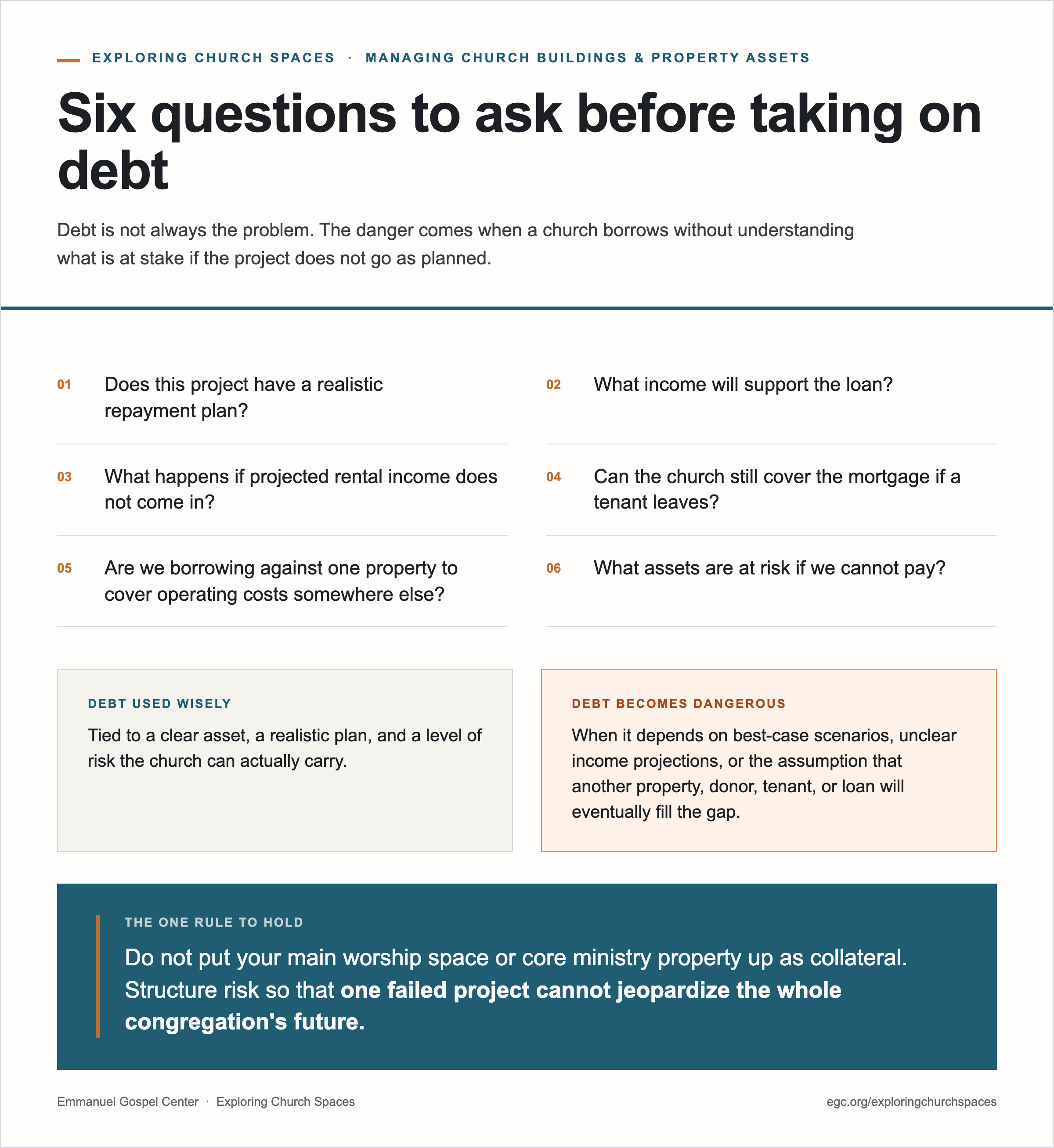
Churches should be especially careful about using their main worship space or core ministry property as collateral for new projects. If a new venture fails, a tenant leaves, interest rates rise, major repairs hit, giving drops, or leadership changes destabilize the congregation, the church should not be at risk of losing the property that anchors its worship and community life.
One church leader explained how they manage risk by protecting their core worship property:
None of our loans have our main worship and retreat center as collateral. For some reason, if the market went to zero, nobody rented from us, and interest rates all went to 30%, we could give up all the properties, but we would still have our main worship center. We just can’t over-leverage.
Before taking on debt, churches should ask hard questions: Does this project have a realistic repayment plan? What income will support the loan? What happens if projected rental income does not come in? Can the church still cover the mortgage if a tenant leaves? Are we using debt from one property to cover unrelated operating deficits? What assets are at risk if we cannot pay?
Secured debt can be used wisely when it is tied to a clear asset, a realistic plan, and a level of risk the church can actually carry. But debt becomes dangerous when it depends on best-case scenarios, unclear income projections, or the assumption that another property, donor, tenant, or loan will eventually fill the gap.
Protecting core ministry assets is an act of stewardship. Churches can take thoughtful risks, but they should structure those risks so that one failed project does not jeopardize the whole congregation’s future.
10. Plan and budget for deferred maintenance.
Many churches live with building issues for years because the list feels overwhelming, and the money is not immediately available. But roofs, HVAC systems, plumbing, electrical systems, water leaks, accessibility barriers, and code issues do not simply stay the same. When they are ignored, they often become more expensive, more urgent, and more disruptive over time.
A building assessment is a good place to start when churches do not know where to begin. An assessment by an architecture or engineering firm can help leaders understand the condition of the property, identify urgent safety concerns, estimate costs, and prioritize what needs to happen first. These assessments should be updated every five years, especially if the church plans to apply for preservation grants or other forms of capital funding, as funders often want current information on the condition of the building and the proposed scope of work.
“Planning for maintenance is not just about preserving a building; it is about protecting the ministries that depend on it.”
Churches should also create a capital maintenance reserve, even if they can only start small. Setting aside money regularly for major repairs helps prevent every building issue from becoming a crisis. Maintenance costs should also be built into annual budgets and rental rates. If tenants and community groups are using the building, the cost of keeping that building safe, accessible, heated, and functional needs to be part of the financial picture.
A dream without a plan is just a wish [as one church leader reflected]. This church is good at dreaming and wishing, but how do we get to a place of planning to get these things to happen? Not just flying by the seat of our pants. Flexibility is great, but also a challenge. Now that we are acquiring assets and budgets are increasing, we are entering into a new level which requires a different approach.”
When prioritizing repairs, churches should focus first on safety, accessibility, roof, HVAC, plumbing, electrical, water intrusion, and code issues. These are the kinds of problems that can quickly shut down worship, programming, community use, tenants, and rental income. It can also help to keep updated quotes for major projects, even if the church cannot complete them right away. Quotes change, but they give leaders a realistic sense of the project’s scale and better prepare the church when funding opportunities arise.
Deferred maintenance can quietly threaten every other property strategy. A church may have tenants, partners, programs, or rental income, but one major building failure can put all of that at risk. Planning for maintenance is not just about preserving a building; it is about protecting the ministries that depend on it.
Stewardship that Sustains Mission
All of these practices can feel tedious. Tracking leases, reviewing agreements, maintaining calendars, working with professionals, building reserves, planning for repairs, and communicating consistently with funders, community partners, and tenants can sometimes feel like drudgery.
However, these leaders have learned personally that it is worth it. Good systems protect more than the building. They protect relationships with tenants and partners. They protect trust with funders, neighbors, and public agencies. They protect the congregation from avoidable financial strain, stress, and burnout. And they protect the church’s ability to use its property for mission over the long term.
A church does not need to do everything perfectly all at once. But every step toward clearer agreements, stronger financial systems, better communication, and more intentional stewardship puts the church in a stronger position for the future. These practices are not separate from ministry; they are a critical part of what allows ministry to flourish and last.


History of Theological Education and Ministry Training in New England
From Harvard College to Bible institutes meeting in churches, Boston and New England have a long history of innovation in theological education and ministry training. The successes and failures of schools in the past can help shape and inspire a new vision for training men and women for gospel ministry.
Emmanuel Gospel Center
New Beginnings: A History of Innovations in Protestant Theological Education and Ministry Training in New England
by Rudy Mitchell, Senior Researcher, Applied Research
Boston and New England have long pioneered innovative models for training pastors, Christian workers, and missionaries, exerting national and international influence on theological education. While some trends in this region have followed cultural and philosophical influences away from biblical orthodoxy, others have strongly supported world evangelism and church growth. By examining the enduring strengths of New England’s innovative approaches, one can discern key principles to guide the future of theological education in Greater Boston, ensuring it remains both adaptive and impactful.
The Days Before Harvard: Theological Education of Boston’s Early Pastors
Understanding the educational background of Boston’s early church leaders offers insight into their approach to differing views and how they designed Harvard College’s program. All first-generation Puritan pastors in Boston attended English universities, and most of the first-generation Boston-area pastors studied at Cambridge University, followed by some pastoral experience in England. (See the Appendix for a list of early Boston-area church leaders along with the education and ministerial training they received.)
The first three leaders of Harvard all attended colleges at Cambridge University. Nathaniel Eaton and Charles Chauncey attended Trinity College, and Henry Dunster attended Magdalene College. Although Boston-area pastors attended several colleges at Cambridge University, a number of influential leaders, including John Wilson, John Cotton, Thomas Hooker, and John Harvard, attended Emmanuel College, founded in 1584 to train young men for the Protestant ministry. It had become an influential center of Puritan education. Cambridge University, therefore, became a fertile seedbed for the growth and education of a large cohort of future New England pastors and leaders.
Laurence Chaderton, a key figure in the Puritan movement, was the Master of Emmanuel College from 1584 to 1622, during which time almost all of the Boston-area graduates of Emmanuel attended. The pastors of the First Churches of Boston, Cambridge, and Charlestown all studied at Emmanuel College. A few pastors, namely the early pastors of the First Church of Dorchester, studied at Oxford University, which was quite similar to Cambridge University at this time. Typically, these early clergy also held a Master of Arts degree, which was conferred on holders of the Bachelor of Arts degree from Cambridge and Oxford after a period of three years, without any further prescribed coursework. Although students, such as John Cotton, spent additional time studying or teaching at the university, others mostly pursued independent study while serving in a parish, since there was no strict residential requirement.
“Boston and New England have long pioneered innovative models for training pastors, Christian workers, and missionaries, exerting national and international influence on theological education.”
The methods of learning at Cambridge were later followed by Harvard. These included lectures, recitations, disputations, declamations, formal sermons, meetings with tutors, and private study. All the formal parts of this education took place in Latin. Students also learned Greek and sometimes Hebrew for Old Testament study.
At Cambridge University, the lectures were organized around questions and articles, with topics and subtopics arranged in a hierarchy of ideas. Public lectures were delivered in the Old Schools,1 and private lectures were given in the colleges. Lecturers were expected to give four lectures a week (although some seemed to be negligent in this).2 The public lectures included theology, medicine, and civil law, among other subjects. Biblical studies, Greek and Latin classics, and mathematics were emphasized. “Lecturers in language, philosophy, dialectics, and rhetoric were held to five lectures per week.”3
Student recitations were oral exercises in which students recited memorized material from texts or previous lectures, translated texts, or explained and defended interpretations. Disputations were informal and formal debates between students. The formal debate sessions lasted four hours, Monday through Friday, during Lent, and were full of ritual, rules, and traditions. Each student was required to participate in four formal debates for the B.A. degree. Students also had to give “declamations” or set speeches in Latin. It was expected that these would exhibit good style and draw quotations from the Greek and Latin classics.

Emmanuel College, Cambridge, England (DAVID ILIFF via Wikimedia Commons. License: https://creativecommons.org/licenses/by-sa/3.0/)
Students would keep notebooks called “Commonplace Books” with their selection of quotations and information on various subjects. Ministerial students would also deliver “Clerums,” formal sermons preached to the clergy on set days. Tutors played an important role in the educational system, providing academic and moral guidance and oversight.
A Cambridge education in this period “was dialectical, Aristotelian, and highly systematized. It was concerned with logic, logical formulations, and disputations.”4 This led to an eagerness “to divide truth from error” and to win debates with adversaries.5
One can see how the elements and tendencies of this educational background carried over to Boston, where disputations on doctrine and Christian practice were common. This educational experience also shaped Puritan leaders’ planning when they developed Harvard College. Some of the strengths of this education were its preparation of students to study the Bible in the original languages, to engage in clear and effective reasoning, and to speak in public.
A Theological School for the Commonwealth: Harvard College (later Harvard Divinity School)
Harvard was established to make sure New England had a well-educated clergy. In 1636, Harvard was founded to “advance learning and perpetuate it to posterity: dreading to leave an illiterate ministry to the churches, when our present ministers shall lie in the dust.”6
Henry Dunster, a graduate of Emmanuel College, Cambridge University, became president in 1640 and developed a course of study adapted from his alma mater. Since instruction and discourse were in Latin, students were required to know Latin before admission. They could prepare for college through private tutoring or at one of the early Latin schools: Boston Latin School (1635), Charlestown School (1636), Mather School in Dorchester (1639), Roxbury Latin School (1645), or Cambridge Latin School (1648).
Greek and Hebrew studies were emphasized in the first two years by daily classes. The purpose of this rigorous language study was to enable students to study the classics and exegete Scripture. The overall curriculum was still centered on the Trivium (grammar, logic, rhetoric) and the Quadrivium (arithmetic, geometry, music theory, astronomy), along with a focus on biblical studies and theology (using The Marrow of Theology by William Ames as a text).

Massachusetts Hall, Harvard University, built in 1720 (Daderot via Wikimedia Commons)
In the first two years, students studied basic mathematics and ethics, as well as logic, using the textbook The Dialectics by Peter Ramus, and rhetoric, using examples from Cicero and Quintilian, to prepare for “declamations” (set speeches in Latin). As they advanced to their third and fourth years, students studied Calvinistic theology, natural philosophy, moral philosophy, and metaphysics. They engaged in weekly “disputations” (debates), prepared sermons, and studied some practical theology.7
Once the first college building was completed, teachers and students lived together, sharing meals, prayers, and recreation. Although there were fewer tutors or teachers, the teaching methods were similar to those at Cambridge University, with disputations, lectures, daily recitations, declamations, and discussions with tutors. Students were expected to engage in daily prayers and devotions, and to learn the catechism.
“After God had carried us safe to New England and we had builded our houses, provided necessaries for our livelihood, reared convenient places for God’s worship, and settled the civil government: One of the next things we longed for and looked after was to advance learning and perpetuate it to posterity; dreading to leave an illiterate ministry to the churches, when our present ministers shall lie in the dust.”
By 1654, Harvard had 50 students. Further ministerial preparation took place after students received their Bachelor’s degrees. “A few students remained at Harvard to read for the Master’s degree, while most apprenticed with local ministers,” and continued independent study. “About half of Harvard students entered the ministry until about 1720.”8
In 1805, Henry Ware was chosen as the Hollis Professor of Theology, signaling a shift toward Unitarianism and theologically liberal views at Harvard. Since the Hollis Professorship of Theology was a key influential position, this was a watershed moment. This change played a role in the founding of Andover Theological Seminary and in the establishment of other later seminaries. In 1816, Harvard Divinity School became a separate school of the university.
Carrying the Torch: Yale College
In 1701 the Collegiate School, known as Yale College after 1718, in Connecticut was founded with a clear purpose: “The founding, suitably endowing & ordering of a Collegiate School within his Majesties Colony of Connecticut wherein Youth may be instructed in the Arts & Sciences who through the blessing of Almighty God may be fitted for Publick employment in both Church and Civil State.”9
.jpg)
Divinity College at Yale before 1870 (Wikimedia Commons)
Ten ministers, led by James Pierpont, took the initiative in bringing the plan to found Yale to the general assembly of Connecticut. They were given funding and the authority to direct its affairs. All but one of these ten founders of Yale were Harvard graduates. During the first several years under the leadership of the Rev. Abraham Pierson, students met together at his church, and instruction was not unlike pastoral mentoring taking place elsewhere during the eighteenth century.
Once the school was firmly established, the early curriculum followed Harvard’s curriculum of the latter 1600s and emphasized theology, the biblical languages, and Bible study. In its early years, Yale was largely focused on training ministers, and even later, when it broadened its focus, the school still trained many influential pastors and theologians: “Whereas almost three-quarters of the early graduates entered the ministry, that proportion fell to around one-half from the 1720s onward.”10
“By examining the enduring strengths of New England’s innovative approaches, one can discern key principles to guide the future of theological education in Greater Boston, ensuring it remains both adaptive and impactful. ”
Those influencing the founding of the college were interested in maintaining the pure Calvinism of the earlier Puritans, since some believed Harvard was becoming liberal in its theology. However, in the decades to follow, Yale would be influenced by revivals and new intellectual currents from England and elsewhere. Jonathan Edwards, a very influential graduate (1720), was a key leader in the First Great Awakening, and Lyman Beecher (1797) was a leader in later revivals in Boston. Jonathan Edwards’ grandson, Timothy Dwight, served as President from 1797 to 1817. His talented and spiritual leadership led to major growth of the college, curriculum improvements, spiritual revival, and influential theological movements, such as the New Divinity and New England Theology under Nathanael Taylor.
A separate Theology Department, which later became Yale Divinity School, was founded in 1822, and Nathaniel Taylor became the professor of theology.
A Broader Table: Brown University
In 1764, Brown University was founded as Rhode Island College. Although the school was open to students of any religious belief, the Philadelphia Association of Baptist Churches had appointed Baptist minister the Rev. James Manning to be President, and Baptist leaders revised the Rev. Ezra Stiles’ draft of the charter for Rhode Island College to ensure Baptists had majority control of the school’s governing bodies.
_2.jpg)
University Hall at Brown University (Wikimedia Commons)
While the college was not designed specifically to train ministers, 43 of its early graduates did become pastors.11 In the early decades, Latin was the common language in most classes and discussions. While theology was not specifically taught, future ministers benefited from Brown’s emphasis on public speaking, orations, and composition. Other parts of the curriculum relevant to their ministerial preparation included logic, Greek and New Testament study, moral philosophy, rhetoric, and general philosophy.12 The educational methods included recitations from texts, lectures, preparing and delivering orations, and disputations (debates) on various theses. Most of the students ate and lived together in the college hall with the tutors and were required to attend morning and evening prayers in the chapel. This learning environment contributed to a sense of community.
A More Personal School: Pastoral Mentoring in New England
Although some mentoring of young prospective pastors occurred throughout New England’s history, this mode of ministerial training seemed to flourish especially after these early colleges were founded and before the establishment of graduate seminary programs such as Andover Theological Seminary.
New England Christian leaders, such as Jonathan Edwards, provided a model of mentoring young graduates in their homes and churches. Typically, when students who felt called to ministry graduated from college, they would seek to study personally with a prominent pastor who would take in a few students to mentor and guide in their further training for the ministry. For example, in 1736, Joseph Bellamy came to study theology with Edwards and live in the family household. Other students followed Bellamy in the Edwards’ household, including Samuel Hopkins in late 1741. Through their study of theology under Edwards, both Bellamy and Hopkins would later become very influential in New England.
.jpg)
Jonathan Edwards by Henry Augustus Loop (1831-1895) after Joseph Badger (Princeton University Art Museum, Public Domain)
This method of study also enabled the students to grow spiritually and learn from the example of their mentor and his wife in handling family life and practical church concerns. When Hopkins was spiritually dejected, Mrs. Sarah Edwards encouraged him, and her “counsel and example in his early spiritual formation had a lasting impact… Hopkins also admired her ‘excellent way of governing her children,’ bringing them to obey cheerfully… Jonathan also showed the greatest calmness as well as the greatest firmness in his discipline, and as ‘a consequence of this, they revered, esteemed, and loved him.’”13 This personal interaction and observation of mature Christians in daily life could be invaluable.
Students mentored in this holistic way received much more than academic information. The Rev. Joseph Bellamy, after settling into a pastorate in Bethlehem, Connecticut, in turn started mentoring many future pastors using questions on theology, evening discussions, and talks. His students would write papers on the questions, and he would respond with corrections or critiques. He had his students give sermons, and they would receive feedback on how to improve. Bellamy strongly encouraged the spiritual life of his students and discussed the joys and trials of ministry with them. Students could observe the pastor in his pastoral duties and could help perform various services in the church. Bellamy served in this way in the latter 1700s and likely had the second-largest number of students of any pastor.14
“This method of study also enabled the students to grow spiritually and learn from the example of their mentor and his wife in handling family life and practical church concerns.”
Others, like the Rev. Smalley, one of Bellamy’s students, followed a similar pattern of ministerial training. One of the Rev. Smalley’s 30 students was Nathanael Emmons, who became an influential proponent of the New Divinity system of theology and mentored nearly 90 students over the years in Franklin, Massachusetts.15 Several of the other prominent pastoral mentors of the period from 1750 to 1810 included the Rev. Samuel Hopkins, the Rev. Timothy Dwight, the Rev. Titus Barton, the Rev. Joseph Lathrop, Dr. Charles Backus, and Dr. Asahel Hooker.16
The pastoral mentoring process had some limitations, including time constraints due to the teacher’s pastoral responsibilities, limited access to books, and the limits of the pastor’s teaching ability and educational background. Nevertheless, this method of ministry training was very important during the period discussed, and has some very valuable elements for any time period.
The Beginnings of the Modern Seminary: Andover Theological Seminary
As Unitarianism gained increasing influence at Harvard and in New England churches in the early 1800s, orthodox Congregationalist leaders grew concerned about the future of sound ministerial training. The appointment of Henry Ware, a Unitarian, as Hollis Professor of Theology at Harvard in 1805 proved to be a watershed moment, prompting several prominent church leaders to pursue the founding of a new school committed to Calvinistic, biblical orthodoxy. Just as Harvard, Yale, and Brown had each been founded in response to a perceived need for faithful Christian education, so this new institution would arise from a similar conviction, and would go on to become the prototype for scores of seminaries founded across America over the next two centuries.
In Andover, Massachusetts, in association with Phillips Academy, the kind of pastoral training that had been flourishing under ministers such as Jonathan Edwards was supported by a scholarship fund. The Rev. Jonathan French mentored groups of students from 1797 to 1808. The Phillips family, who founded Phillips Academy in 1778, planned for the school to teach orthodox Christian doctrine and promote piety and virtue. Although the academy was only a preparatory school, its campus would, in a few decades, become host to Andover Theological Seminary.
The Academy’s first principal was Dr. Eliphalet Pearson. He later became Professor of Hebrew and then interim President of Harvard in the early 1800s. He was opposed to the growing liberal theological and Unitarian movement; therefore, when Henry Ware, a Unitarian, was appointed Professor of Theology at Harvard, Pearson resigned. He returned to Andover and helped spearhead a group seeking to establish a new Calvinistic, orthodox school to train ministers. This Founders Group working in Andover included the Rev. Jedidah Morse, a Charlestown pastor; Mr. Samuel Abbot, a wealthy potential donor; Mrs. Phoebe Phillips and her son, John Phillips, who committed to fund two buildings; Samuel Farrar, a lawyer; the Rev. Jonathan French; and several others.

Andover Theological Seminary by J. Kidder (1813-1823) (Yale University Art Gallery, Public Domain)
Meanwhile, a second group, led by Dr. Samuel Spring of the North Congregational Church in Newburyport, had developed a vision for an orthodox ministry training school. Dr. Spring and potential theology professor, Leonard Woods, had gathered the support of three wealthy “Associate Donors”: Moses Brown, William Bartlett, and John Norris. After lengthy negotiations involving theological differences, financial arrangements, and authority structures to ensure doctrinal fidelity, the two groups merged their vision into one new school at the Phillips Academy campus—the Andover Theological Seminary. Dr. Woods, who was friends with both Dr. Spring and his former teacher, Dr. Pearson, served as a bridge-builder, bringing the two groups to agreement, and was appointed to the important post of Professor of Theology.17
Founded in 1807, this was the first Protestant graduate-level seminary in America, and it became the prototype for scores of seminaries founded over the next 200 years.
Andover’s approach was a three-year curriculum for college graduates who would live on campus and learn from highly qualified professors in residence. Initially, donors even sponsored and built houses for specific professorships. Early professors besides Dr. Leonard Woods included Moses Stuart (Biblical studies, languages, and exegesis), Dr. Edward Dorr Griffin (rhetoric and preaching), the Rev. Ebenezer Porter (preaching), and Dr. Pearson (natural theology). Students studied Hebrew and Greek, hermeneutics, and the principles of exegesis under Dr. Moses Stuart, who “had a powerful influence in promoting in our country the study of the Scriptures in their original languages.”18 Other subjects included church history, theology, preaching, rhetoric, and pastoral duties.
“Just as Harvard, Yale, and Brown had each been founded in response to a perceived need for faithful Christian education, so this new institution would arise from a similar conviction, and would go on to become the prototype for scores of seminaries founded across America over the next two centuries.”
Professors experimented with various teaching methods, including recitations followed by the teacher’s explanations, lectures with free discussions and questions, and writing papers.19 However, Dr. Woods believed the most valuable learning time was the weekly Wednesday evening discussion. These were open discussions on theology and “all matters relating to Christian experience, duty, and comfort.” Moses Stuart led these with Dr. Woods, who said, “We poured out the feelings of our hearts to our beloved students.”20
Professors met with students one-on-one to talk about their spiritual lives, encouraged them to read devotional works, and, in general, placed a high priority on their spiritual growth. Once each term, the seminary would hold a fast with prayer and discussions. Professors such as Dr. Woods would take walks with students, or take groups of six at a time home to a social meal with their families after prayers in the chapel. The professors’ homes were on or near the campus and thus accessible. Andover’s new three-year training process provided extended time for deeper study, access to library resources, housing, and classrooms, while still facilitating personal interaction with the best teachers, who could now devote nearly full-time to their students.
Over the school’s first 38 years, it admitted 1,500 students, and its graduates became pastors, missionaries, and educators, some of whom became presidents, leaders, or founders of other colleges.21 During those early years, the faculty and students played a central role in the founding of the pioneering American Board of Commissioners for Foreign Missions (ABCFM) and in the growing American missionary movement. America’s first foreign missionaries were ordained at Tabernacle Congregational Church in Salem, Massachusetts, on February 16, 1812. Those five pioneering missionaries—Adoniram Judson, Gordon Hall, Luther Rice, Samuel Nott, and Samuel Newell—were all graduates of Andover Theological Seminary, which had nurtured their missionary zeal and supported their efforts to establish the ABCFM.
The First Baptist Seminary: Newton Theological Institute
Under the leadership of Dr. Thomas Baldwin, pastor of the Second Baptist Church of Boston, area Baptists founded the Massachusetts Baptist Education Society in 1814 to help financially support students called to the ministry. This organization advanced the idea that Baptist pastors would benefit from more education.
By May 1825, the Society’s executive committee and Baptist ministers were ready to found a theological school “where the combined powers of two or three or more men of experience, and men of God, can be employed in instructing and forming the manners and habits and character of pious young men for the work of the ministry.”22 From this statement, one can discern the important goal of students’ spiritual formation, not just intellectual instruction.
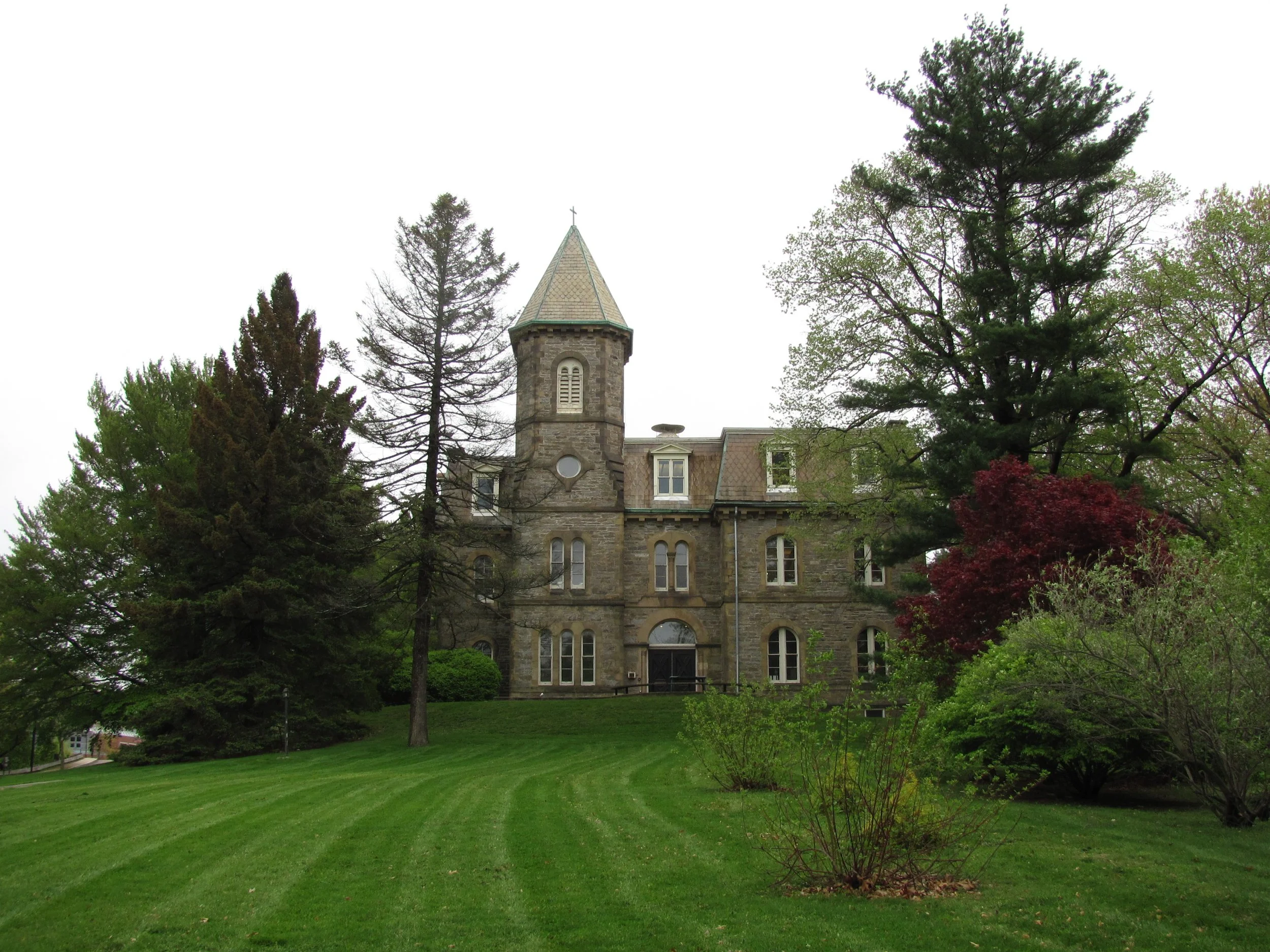
Colby Hall, Newton Theological Institute (John Phelan, 2011, via Wikimedia Commons)
The planning committees moved rapidly, purchasing the 85-acre Peck Estate on a hill in Newton for the campus and hiring the Rev. Irah Chase as Professor of Biblical Theology. The Rev. Chase, who was a graduate of Andover Theological Seminary, began teaching in November at the new Newton Theological Institute.23 The following year, Dr. Henry J. Ripley, also an Andover graduate (1819), became Professor of Biblical Literature and Pastoral Duties. Since both professors were products of Andover, it is not surprising that this new school developed a three-year curriculum and educational process somewhat like that of their alma mater.
The students took courses in Biblical literature, church history, Biblical theology, and pastoral duties. One of the central goals for students was to understand the Bible clearly and teach its lessons effectively. “Newton became the first freestanding post-graduate Baptist seminary to be established in North America, the first Baptist graduate school of any kind.”24 In 1849, Dr. Alvah Hovey began his long and influential career as a professor and later as President of Newton. He continued to defend orthodox theology throughout the last half of the nineteenth century.
A New School for Congregationalists: Hartford Theological Seminary
As the New England Theology was gaining ground, an opposing Pastoral Union group of “Old Calvinist” pastors in Connecticut founded the Theological Institute of Connecticut in East Windsor in 1834. This seminary would later move to Hartford and change its name to Hartford Theological Seminary.
_(14784222972).jpg)
Hosmer Hall, Hartford Theological Seminary (1889) (Wikimedia Commons)
Like Andover, the new seminary, led by Dr. Bennet Tyler, offered a three-year course of study for college graduates. They came from several different states, but were often graduates of Amherst College, Williams College, and Yale College. Tuition, rooms, and the library were free, and by 1843, the school building had rooms for 52 students. By that year, 62 students had graduated and gone on to become pastors or missionaries.25 Although students studied several subjects each year, including church history, the first year emphasized Biblical interpretation, the second year systematic theology, and the third year sacred rhetoric and pastoral theology.26
Ministry Training for Methodists: Boston University School of Theology
In the late eighteenth and early nineteenth centuries, most Methodist pastors did not attend a college or seminary for ministerial training. They basically learned on the job with some guidance from the presiding elder, or district superintendent, and in some places, a list of books to read.
Although Wesleyan College (later University) of Middletown, Connecticut, was originally Methodist, it was not founded to specifically train pastors: “From 1831 to 1870 Wesleyan was a local evangelical enterprise promoted by a town that provided land and buildings and by a few Methodist clergy and laymen who extracted very limited support from a denomination having only a nascent interest in higher education.”27 The school did have Christian objectives, and undoubtedly some Methodist leaders did receive a general college education there, although not specialized ministerial training.
After several years of debate, Methodist leaders at a convention in Boston in 1839 were ready to propose the establishment of a theological school. This group approved the establishment of a seminary and decided to work with and support a new program to be part of a school in Newbury, Vermont. Under the leadership of Osmon C. Baker, the program, called the Newbury Theological Institute, trained pastors until 1847.
“It is intended that the student shall do something more than merely memorize text-books. Whenever a branch of science or a portion of a branch, can be best taught by a fresh original handling...the professors will not shrink from the additional labor which such methods necessarily involve.”
At that time, the students, finances, and library were moved to Concord, New Hampshire, and under a new charter, the school became independent with the new name, Methodist General Biblical Institute (also called the Concord Biblical Institute). John Dempster, a former missionary, became the President, while Osman Baker moved and continued to teach.28 Even in this early period, the seminary had some emphasis on missionary work.29 With the rapid growth of Methodism and the development of a more robust program, the Institute flourished in Concord over the next 20 years.
In 1867, the school relocated to Boston and reorganized as the Boston Theological Seminary. Meanwhile, over the next few years, Methodist leaders were working to establish Boston University, with plans to create four professional and graduate schools. In 1871, the seminary became part of the new university as its first professional school.
The school was designed to have a regular three-year ministerial course and also a three-year course in missionary work. The curriculum had four major sections: exegetical theology, historical theology, systematic theology, and practical theology. Exegetical theology included the study of Hebrew, Greek, exegesis, and archaeology. Special studies were offered in various other languages—including Spanish and Asian languages for missions—plus music, German theology, and medical topics for missions.

Boston University Marsh Chapel (John Phelan, 2011, via Wikimedia Commons)
Teachers were encouraged to use fresh and varied methods of instruction: “It is intended that the student shall do something more than merely memorize text-books. Whenever a branch of science [knowledge] or a portion of a branch, can be best taught by a fresh original handling in the way of written lectures, or by free exposition, or by black-board exercise, or by a Socratic method, or by a combination of any or all of these, the professors will not shrink from the additional labor which such methods necessarily involve.”30
Spiritual life was encouraged by three prayer meetings each week and morning and evening devotions. Missions was generally emphasized, and students were encouraged to attend the meetings of the Missionary Association. The school was a pioneer among seminaries in admitting women. Anna Howard Shaw and Helen Magill White were among the early graduates in the 1870s.
The school was innovative in setting up two divisions. The First Division would only accept students who had earned a B.A. degree. After three years of coursework and passing an examination, they would receive a Bachelor of Divinity degree. The Second Division opened access to students who had completed a secondary education but, for various reasons or due to age, had not been able to earn a B.A. degree. These students could receive a diploma after completing the course of study.
While the Boston University School of Theology followed the basic pattern of other three-year residential seminaries, it introduced several innovative policies and was the first theological seminary of the Methodist Episcopal Church. By 1871, it was the largest seminary in New England. Much later in the 1930s, the seminary, along with the university, moved from Beacon Hill to a new campus along the Charles River.
Ministry Beyond the Pulpit: New England Deaconess Training School
In 1889, the Methodists initiated another training effort, the New England Deaconess Training School (and Deaconess House), located at 45 East Chester Park in Boston’s South End. This was part of a larger movement, beginning in Europe, to revive the formal lay ministry of deaconesses. The program was designed to educate young women for missionary and service work, especially in the city. Mary E. Lunn, the first superintendent, also advocated for a hospital, and in 1896, she founded New England Deaconess Hospital in a South End brownstone.
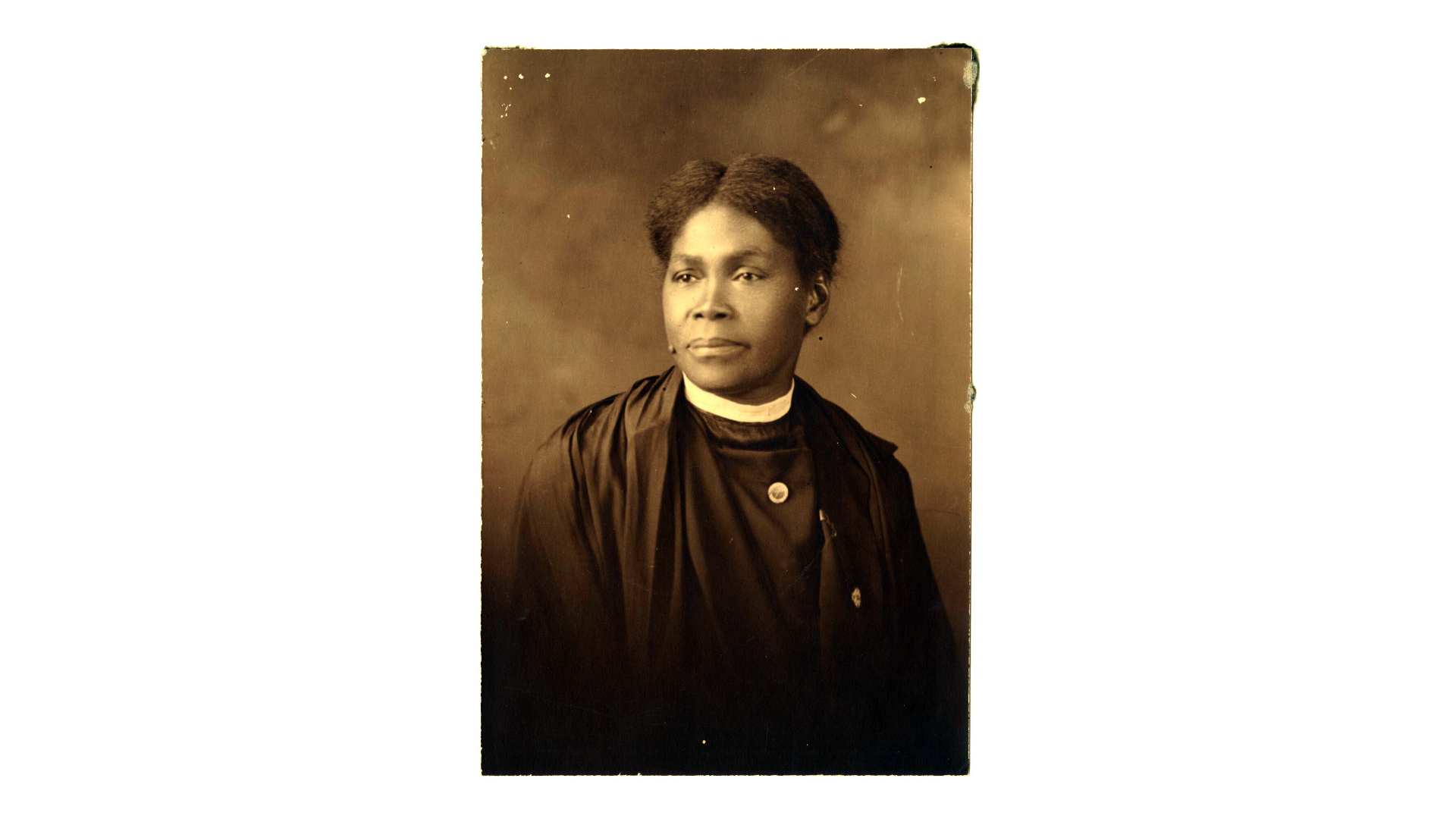
“Anna E. Hall, circa 1900”. Anna E. Hall Collection. Atlanta University Center Robert W. Woodruff Library. http://hdl.handle.net/20.500.12322/auc.119:0077.
The training school offered courses in theology, church history, and other subjects, including sociology in cooperation with Simmons College after 1900. The school’s first African American graduate, Anna E. Hall, became a missionary educator in Liberia, serving for 24 years as director of a girls’ school and home.31 Other deaconesses went on to study at the nursing school associated with the hospital.
In 1918, the Deaconess Training School became a part of Boston University and was renamed the School of Religious Education and Social Service.
An Episcopal School for the Commonwealth: Episcopal Theological School (later Episcopal Divinity School)
In the early nineteenth century, New England Episcopalians who felt called to ministry would often go to New York City to study at the General Theological Seminary. However, a significant number of these students stayed in the New York area after graduation rather than returning to serve in New England. This situation led church leaders in Boston to start planning an Episcopal seminary in Massachusetts. Beginning with a resolution passed at the 1831 Massachusetts Episcopal Convention, several efforts were made over the years to found a theological school in the Boston area.
These efforts failed to bear fruit due to a lack of finances until, finally, in 1867, Benjamin Tyler Reed, a wealthy Boston businessman, committed $100,000 to endow what soon became the Episcopal Theological School.32 He did not want the school to become embroiled in controversies that might arise within the denomination, and so he sought to make it independent of the diocese, its conventions, and its bishop, in part by establishing its trustees as laymen only. They would control temporal matters, while the faculty would have some oversight of theological and academic matters.
Reed called on Dr. Francis W. Wharton, rector of St. Paul’s Church of Brookline, who was a brilliant legal expert, to draw up the school’s constitution, develop its organization, and help gather the first group of faculty. Wharton is thus often considered the founder of the Episcopal Theological School. With his legal background, he emphasized apologetics and Christian evidences in the curriculum. He also taught liturgics, polity, canon law, homiletics, and pastoral care.

Episcopal Theological School, Cambridge, Massachusetts (Wikimedia Commons)
The Rev. John Seeley Stone, a leader among evangelicals and one of the great preachers of the time, became the dean and professor of systematic divinity (theology). Other courses in the three-year curriculum included Hebrew, Greek, Biblical interpretation, and church history.33 Dean Stone “opposed what he called the ‘rationalistic tendencies of our time,’ and meant the school to stand as a bulwark of evangelicalism.”34
At the end of the school year, professors conducted oral public examinations of students in all classes. During the first 10 years, a chapel and other buildings were completed at the Brattle Street campus in Cambridge. The student body at that time averaged only about 12 to 15 students. The school followed the general pattern of other seminaries in establishing a three-year, post-college course on a residential campus, but its governing structure was innovative for a seminary serving a specific denomination but outside its power structure.
To the Ends of the Earth: The Bible School and Missionary Training Institute Movement
After experiencing urban revivals in 1842, 1857-58, and 1877-78, Boston contributed to other growing Christian movements, including the Foreign Missions movement, the Holiness or Higher Life movement, and the Faith Cure or Divine Healing movement. Involvement in these movements led to the founding of other training schools. In addition to Boston University School of Theology, other schools with an emphasis on foreign missions included the Faith Training College and the Boston Missionary Training Institute (eventually named Gordon College after its founder).

Charles Cullis (Wikimedia Commons)
One major new development in Christian ministry training was the Bible School and Missionary Training Institute Movement. These schools offered a shorter course of study, emphasizing Bible study, practical ministry training, and spiritual life to prepare men and women for home and foreign missionary work. Although short-lived, the Boston Faith Training College could be considered the pioneering American institution in what became the Bible College Movement (followed by A.B. Simpson’s Missionary Training Institute [Nyack College] in 1882; Moody Bible Institute in 1886-7; and the Boston Missionary Training Institute [Gordon College] in 1889). A. B. Simpson and his institute became very influential in the Bible College Movement and in missions. Simpson, in turn, was greatly influenced by Charles Cullis. “Probably the American educator with the greatest influence upon A. B. Simpson was Dr. Charles Cullis…. Cullis’ Faith Training College convinced Simpson that he could successfully launch a missionary training college.”35 D. L. Moody was also influenced by his Boston contacts and background.
Faith Training College
Dr. Charles Cullis, the leader of a large network of ministries in Boston, the U.S., India, and China, founded the Faith Training College on Beacon Hill in 1875. The Faith Training College described its efforts as “…to train for Christian work such consecrated men and women as are unable to pursue an extended and thorough course of theological study in the various denominational seminaries, but are desirous of fitting themselves for the highest efficiency in the widening fields of lay activity, which the Head of the Church is wonderfully opening in our age, such as Sunday School instruction, Christian Association work, Bible exposition, exhortation, lay preaching, lay evangelism, home and foreign missionary labor” (1875 Annual Report, p. 90).
The Bible college model emphasized a shorter course of study, a focus on the Bible, practical ministry, witness, and missions. Faith Training College was co-educational and tuition-free.
Dr. Cullis, the founder, had also founded the Boston Consumptives (tuberculosis) Home, the Spinal Home, and the Cancer Home, and he was the most prominent national leader of the Divine Healing Movement. Among the college’s teachers was William Boardman, Professor of Christian Life. He ministered throughout Europe and England, spreading the Higher Life Movement and, along with Robert Pearsall Smith, inspiring the Keswick Conference movement. Boardman was a graduate of Yale University and Lane Theological Seminary. Daniel Steele, a graduate of Wesleyan University, was professor of systematic theology, and A. B. Earle was professor of revivalism, a position that was probably unique to Faith Training College. Another professor was Charles Wesley Emerson, the founder of Emerson College.
Boston Missionary Training Institute: Gordon College and Gordon Divinity School (later Gordon-Conwell Theological Seminary)
In 1889, Dr. A. J. Gordon, pastor of the Clarendon Street Baptist Church in Boston, founded the Boston Missionary Training Institute to help train Christian men and women for missionary work. Pastor Gordon had been inspired by Dwight L. Moody’s months-long evangelistic campaign next door to his church in 1877 and by the great London conference on foreign missions in 1888.
In 1884, Dr. and Mrs. Grattan Guinness, the directors of the Livingstone Inland Mission in the Congo, had offered the mission to the American Baptist Missionary Union. The Rev. A. J. Gordon became the Chairman of the Executive Committee of the Missionary Union and, therefore, was concerned with the Congo mission’s great need for funds and missionary candidates in the late 1880s.36 This was one of the major motives for starting a missionary training school with a short course of studies. Dr. Guinness and the Rev. M. R. Deming of the Bowdoin Square Tabernacle church were also involved in founding the school. Dr. Gordon’s work with Dr. Guinness also would have familiarized him with the details and model of the East London Missionary Training Institute that Guinness had founded in 1873.
“Although many students came from the Boston area, some came from as far away as Kansas, Indiana, and New York.”
Pastor Gordon, like Dr. Cullis at the Faith Training College, saw a need to provide access to ministry training for those who could not follow the rigorous academic path of four years of college and three years of seminary. The school charged no tuition, admitted both men and women, and did not require a high school or college education to enroll. The normal course of study was two years, with classes during the day, but the school also began offering public evening lectures and Bible courses taught by Dr. James M. Gray and Rev. F. L. Chapell. These were attended by hundreds of people.37 Dr. Gray became one of the best-known Bible teachers in the country and later served as President of Moody Bible Institute. Dr. Chapell taught the majority of the core courses during the school’s first ten years.
In some of the early years, women students were in the majority in the daytime classes. Women were also serving as teachers and administrators. Mrs. Maria Gordon served as secretary, treasurer, and a teacher at the school. Other women teachers were Dr. Julia Morton Plummer, Mrs. Susan G. Gray, Mrs. Chapell, and Miss Blanche Tilton.
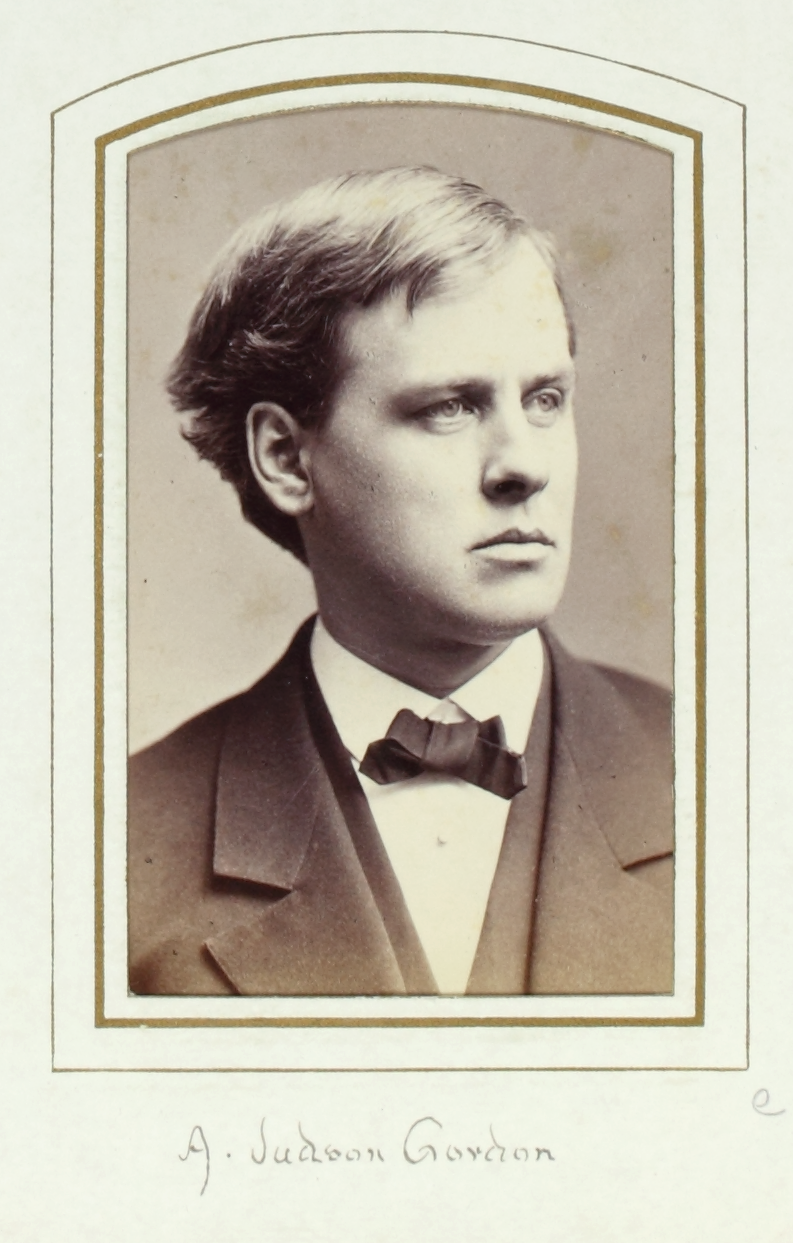
Adoniram Judson Gordon (Library Company of Philadelphia)
The school emphasized the consecrated spiritual life of the students with daily devotional periods, including testimonies and singing. The classes included theology, missions, comprehensive Bible study, music, and Christian Life and Service. Students engaged in extensive practice in Christian work at Clarendon Street Baptist Church, in their own churches, or in the city.
Although many students came from the Boston area, some came from as far away as Kansas, Indiana, and New York. In the first ten years, 500 students attended day classes, 1,000 to 1,500 benefited from evening classes, and about 50 students, both men and women, went on to serve in foreign missions. Also, 50 students became pastors, and at least 200 went into other Christian work.38
The school went through a number of name changes, but the most noteworthy was when it became the Gordon Bible and Missionary Training School after the death of Dr. A. J. Gordon in 1895. In 1927, the state legislature granted the school the authority to award graduate degrees, and, in 1931, the graduate theological course became the Divinity School of Gordon College. After a number of years in the Fenway area of Boston, the divinity school, followed by the college, moved to Wenham, Massachusetts, in the 1950s.
Multiplying Leaders: Boston Young Men’s Christian Association
In 1851, Boston leaders founded the first YMCA in America following the model of the London YMCA. Although this pioneering organization was never a formal ministry training school, it did have classes and, in various ways, trained young men in biblical study and practical ministries.
In its early decades, the Boston YMCA was clearly Christian and trained young leaders to go out to other towns and cities in Massachusetts and New England to start or support other YMCAs. An 1870 report states, “About 118 of the Associations [local YMCAs] in this country are in Massachusetts. Many calls are made for our young men to address public meetings, conventions, etc.”39 In this process, they also did evangelism, and the Boston YMCA was involved in many evangelistic activities and conventions.

YMCA, Berkeley St., Boston (Wikimedia Commons)
After the Civil War, the work was characterized by spiritual fervor, overflowing prayer meetings, and “quite a number of its members were reported as studying for the ministry.”40 Also, in 1885, a YMCA School for Christian Workers was started in Springfield, Massachusetts. It emphasized training YMCA leaders who would lead programs that nurtured the spirit, mind, and body. The school was also notable as the birthplace of basketball. In 1890-91, the name was changed to the International YMCA Training School, which later became Springfield College.
The education department in Boston also grew significantly in the late nineteenth century. Although many of the classes at the Boston YMCA were on practical subjects related to vocations and avocations, there were some Bible classes. By 1896-1898, the education department under Frank Palmer Speare became highly organized into an Evening Institute. The school grew rapidly and evolved, with state approval, in 1916, into Northeastern College, and, in 1922, into Northeastern University, which eventually became independent of the YMCA.
Holiness Unto the Lord: Eastern Nazarene College
Founded as part of the holiness movement in 1900, Eastern Nazarene College was initially called the Pentecostal Collegiate Institute and was located in Saratoga, New York. Lyman C. Pettit served as its first president. Within two years, it moved to North Scituate, Rhode Island. The original plan was to provide a liberal education and ministry training through a preparatory academy, a four-year college, and a seminary.
In the early years, the school was connected to the Association of Pentecostal Churches of America (APCA), a network of Wesleyan-holiness churches. When the APCA merged into the Church of the Nazarene denomination in 1907, the institute became affiliated with the Nazarenes. In 1918, the school was chartered with degree-granting authority in Rhode Island and was renamed Eastern Nazarene College. The following year, it moved to Quincy, Massachusetts, to be near Boston and Harvard University.

Gardner Hall, Eastern Nazarene College (Wikimedia Commons)
The school sought to integrate Christian perspectives across its liberal arts and business curriculum. Although the original plan included a seminary, it was not until 1938 that the school started a graduate program in theology. In 1946, the school was offering 30 courses in Bible and Theology.41 In 1964, the theology program was replaced by a master's degree program in religion.
The college closed in May 2025 due to financial challenges and a declining student body.
Providence Bible Institute / Barrington College
The roots of Barrington College trace back to Bethel Bible Training School in Spencer, Massachusetts, founded in 1900 by the Baptist pastor, Essex W. Kenyon, who “wanted to train young Christians in the Bible and Christian service.”42 Some students went on to be missionaries overseas.
In 1923, the school moved to Dudley, Massachusetts, and was renamed the Dudley Bible Institute. The following year, after Kenyon resigned, Howard W. Ferrin became president (Ferrin’s mentor, Paul Rader, was nominal president in absentia). In 1929, under his leadership, the school moved to Capitol Hill, Providence, Rhode Island, and was renamed Providence Bible Institute.

Barrington College, Barrington, Rhode Island (Kenneth C. Zirkel via Wikimedia Commons)
Ferrin came to the school after serving in a multifaceted ministry with Paul Rader at the Chicago Gospel Tabernacle. He had experience in urban ministry, evangelism, and using radio. Thus, Providence Bible Institute became an urban school within a sphere of multiple ministries that Ferrin developed. In addition to a radio ministry, traveling student music groups, conferences, and evangelistic outreach events, he developed evening Bible schools in Boston, New York City, and Providence.
In 1950, the school purchased a 150-acre campus in Barrington, Rhode Island, for $331,001, winning the bid by one dollar. From 1950 to 1960, the school operated two campuses in Providence and Barrington, but then consolidated its work at Barrington and was renamed Barrington College. In 1985, the college merged with Gordon College and sold the campus to Zion Bible Institute.
Pentecostal Fire: Zion Bible Institute / North Point Bible College
In 1924, the Rev. Christine A. Gibson founded a Pentecostal missionary training school in East Providence, Rhode Island. In its early years, the school was called The School of the Prophets, but in 1936, it was renamed Zion Bible Institute. The school has had an emphasis on studying the Bible and preparing young people for Pentecostal ministry.
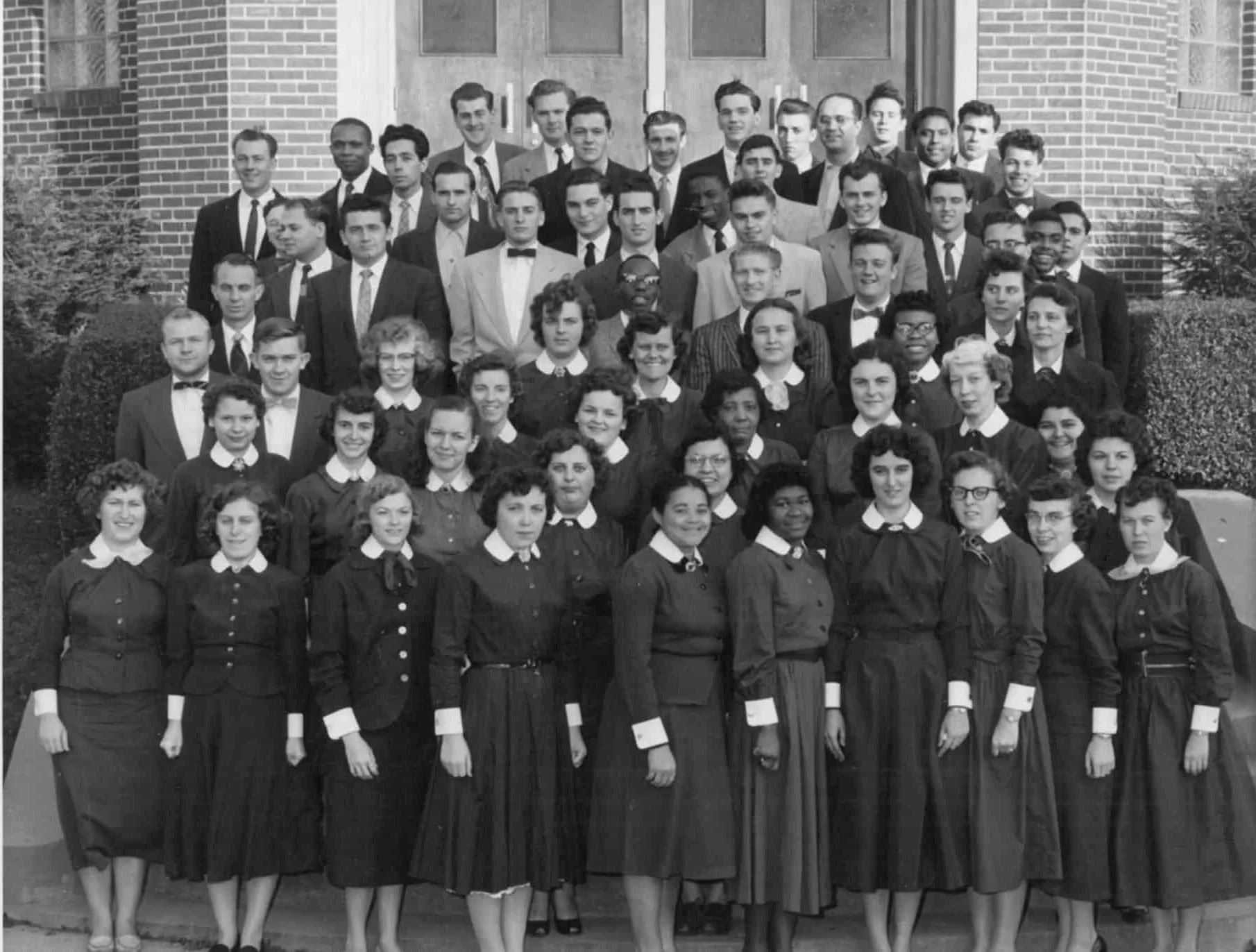
Northpoint Bible College
When Barrington College merged with Gordon College in 1985, Zion bought their former campus. Then, in the summer of 2008, the school relocated to the former campus of Bradford College in Haverhill, Massachusetts. David Green, a wealthy Christian businessman, had purchased the campus the year before and gave it to the college for $1.00, along with funds for renovations.43
Bradford College, founded as Bradford Academy in 1803, helped educate a number of missionaries in the nineteenth century, including Ann Hasseltine Judson (Burma), John Taylor Jones (Thailand), and Lucy Goodale Thurston (Hawaii). In 2011, after the move to the Bradford campus, the school received approval to offer a Master of Arts in Practical Theology program that focuses on church planting and revitalization, as well as spiritual formation.44 Later, in 2013, Zion officially changed its name to Northpoint Bible College and Graduate School.
Rooted in the City: Theological Training for the People
Boston also developed models for training lay leaders of city churches. Two of these models were the Boston Evening School of the Bible and the Center for Urban Ministerial Education, which has trained both lay leaders and pastors. In addition, many smaller Bible Institutes have been held in local churches, offering courses in Spanish or English.
Boston Evening School of the Bible
In the fall of 1942, Harold J. Ockenga, Pastor of Park Street Church, and Howard W. Ferrin of Providence Bible Institute established the Boston Evening School of the Bible. “It was their desire to help Christian people in all churches, irrespective of denomination, to secure a thorough and systematic knowledge of the Bible and practical training for various kinds of Christian work.”45
Classes were held at Park Street Church from November to April, and classes followed a six-year curriculum. Classes thoroughly covered the Bible and also included Christian doctrine, church history, archaeology, evangelism, teacher training, and other ministry topics. The first dean was Dr. Morton C. Campbell, a former professor at Harvard Law School.46 Major goals of the School of the Bible were to address biblical and theological illiteracy and to prepare laypeople for church ministry. The average pastor was overburdened and could not provide the depth and range of training needed.47 This was not just an enhanced Sunday School, but a major educational program involving hundreds of students and excellent teachers. The successor to this was called the Boston Center for Christian Studies.
“The principles of Theological Education by Extension were developed and adapted in some programs during this period.”
During the period from the 1960s through the 1980s, American cities were experiencing many changes and challenges, and Christians responded with new models of theological education. Cities were going through racial transition, facing many problems, and receiving an influx of new immigrants from Latin America, the Caribbean, and Asia. Theological education needed to be contextualized to address urban issues, scheduling constraints of bi-vocational leaders, language needs, and other concerns.
The principles of Theological Education by Extension (TEE)48 were developed and adapted in some programs during this period. Several urban training efforts used experiential, action-reflection, or action-training models of urban education. Some examples of urban ministry training programs of that time were the Urban Training Center for Christian Mission (UTC, Chicago), New York Theological Seminary programs led by Bill Webber, Seminary Consortium for Pastoral Education (SCUPE, Chicago), the Center for Urban Theological Studies (CUTS, Philadelphia), and the Center for Urban Ministerial Education (CUME, Boston).
Center for Urban Ministerial Education (CUME): The Boston Campus of Gordon-Conwell Theological Seminary
Following a 1969 merger of Gordon Divinity School and Conwell School of Theology, the merged school sought ways to train leaders for urban ministry. In the early 1970s, the Rev. Michael Haynes of Twelfth Baptist Church, Doug Hall of the Emmanuel Gospel Center (EGC), and Dr. Stephen Mott of Gordon-Conwell helped establish an Urban Middler Year program enabling residential students to spend their middle year in the city of Boston with classes at EGC and field education in various city churches or ministries. However, this effort was not meeting the need for in-service training of Black and Hispanic leaders already in ministry.
Therefore, when Eldin Villafane was hired in 1976, he began developing what became the Center for Urban Ministerial Education (CUME). CUME was a new model for linking with a seminary rather than a college, and for its many methods of contextualizing theological education for urban leaders. As Villafane studied various programs, he incorporated ideas from action-reflection biblical models, urban Bible institutes, and Theological Education by Extension.49 “Extension education,” Villafane said, “is not merely a matter of conducting the same classes with the same educational methods and the same teachers in a different location.”50
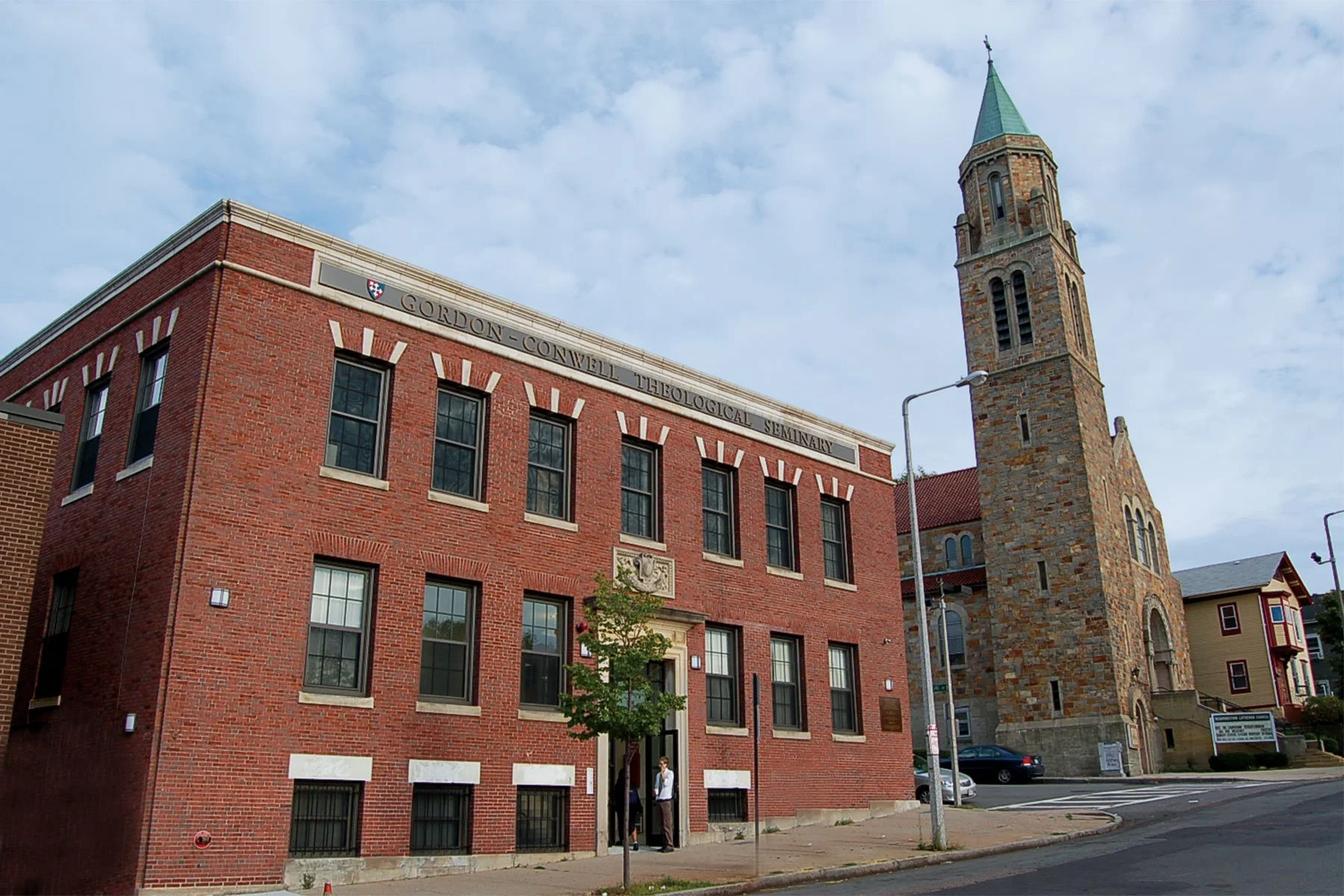
Center for Urban Ministerial Education, Roxbury, Massachusetts
The CUME program provided access to an accredited seminary education for Christian pastors and lay leaders who were called, gifted, and experienced in ministry, but, for socio-economic and other reasons, had been excluded from a residential program. Even if they could have attended a traditional seminary program, it would not have been contextualized to the needs of their urban and immigrant church ministries. The CUME program was located in the heart of the city,51 with a diverse administration and faculty, and offered contextualized coursework in Spanish, Portuguese, French (for Haitians), and English. All classes were held in the evenings and on weekends when bi-vocational leaders could attend. To reduce economic barriers, tuition was reduced, and scholarships were available. The student body included leaders from many backgrounds, including Hispanic, Black, Brazilian, Haitian, Chinese, Korean, and Anglo churches of many denominations. This had the added benefit of promoting interchurch fellowship and ministry collaboration.
By 1983, the program had 177 students from 104 churches, and in subsequent years it more than doubled in size. Over the years, CUME has offered certificate and diploma programs, as well as M.A., M.R.E., and Master of Divinity programs, along with Mentored Ministry for the practical application of coursework. The program has declined greatly in recent years, but much can be learned from the ideals and principles of this model of theological education.
Conclusion: A Legacy of Innovation
These individual stories of the beginnings of new schools and training programs for Christian leaders reveal educational innovations and adaptations that can inspire current theological education initiatives. In founding Harvard University in 1636, Boston-area leaders used the curricula and learning methods they were familiar with from Cambridge and Oxford Universities. However, as they developed the first institution of higher education in North America, they pioneered adaptations to the new environment and their limited resources. They also paved the way for other early colleges. The strengths of the English and early American collegiate forms of ministry training included active learning of effective reasoning, rhetoric, and logic; an emphasis on biblical study with training in Greek and Hebrew; and residential community life with tutors and devotional practices.
Especially in the eighteenth and early nineteenth centuries, pastoral mentoring was a vital form of ministerial education. This method had some limits tied to the pastor’s limited time, library, breadth and depth of knowledge, and teaching ability. However, pastoral mentoring had strengths, including personal interaction with the pastor and the opportunity to observe how he handled the trials and joys of life and ministry. Students also received practical instruction and opportunities to preach and serve in ministry with coaching and feedback. This personalized education was also well-suited to encourage personal spiritual growth.
The founders of Andover Theological Seminary (1807) sought to maintain traditional Reformed theology and biblical views in their training. However, Andover was innovative in establishing the first American model of a three-year, graduate-level residential seminary. This model was the prototype for scores of later theological seminaries. The strengths of this form of training, at least ideally, included providing distinguished professors with a depth of knowledge who could teach general and specialized courses and interact with students in class and out of class. In this type of residential seminary, students and faculty could focus much of their time on studies with less distraction. A residential seminary could provide a good library, residences, classrooms, and community life to encourage spiritual growth.
“These individual stories of the beginnings of new schools and training programs for Christian leaders reveal educational innovations and adaptations that can inspire current theological education initiatives.”
In the late nineteenth century, cities and their churches were rapidly growing, and the need for foreign missionaries increased as that movement expanded. These factors led to a need for new forms of accessible ministry training for those who couldn’t afford a full college and graduate seminary program. In response, Boston-area leaders founded some of the early Bible and missionary training institutes and schools. These were the early prototypes of the Bible School Movement. Faith Training College and the Boston Missionary Training Institute (later called Gordon College) offered shorter courses of study, with the advantage of preparing lay leaders and missionaries with free tuition, with low entry requirements, and with more practical, Bible-centered courses. Courses were offered for both men and women and were sometimes available in the evening. Several other area schools started as similar Bible institutes and, over the years, evolved into Christian colleges.
More recently, Boston-area leaders have developed ministry training programs contextualized to the changing city with its various social needs and growing immigrant populations. Gordon-Conwell Theological Seminary developed the Center for Urban Ministerial Education. Among its strengths were accredited classes in several languages, held in the evenings and on weekends to accommodate lay leaders and bi-vocational pastors, and reduced tuition costs. The model drew on principles of Theological Education by Extension and action-reflection learning to integrate ministry preparation with ongoing involvement in the students’ own churches. Course content and topics were designed to address the needs of the urban context. This innovative program also became a model for other cities.
While other models could be cited, these examples demonstrate how Boston and New England schools have built on the past and created new innovations in theological education. These efforts in training pastors, lay leaders, and missionaries have had a worldwide impact and paved the way for the founding of many other ministry training schools.
Appendix
The following list identifies the education and ministerial training of early Boston-area church leaders.
-
John Wilson, pastor at First Church of Boston, studied at Kings College at Cambridge (BA, 1610) and Emmanuel College at Cambridge (MA, 1613). Wilson served as a chaplain to prominent families, was a pastor in Sudbury, England, and also studied law.
John Cotton, teacher at First Church of Boston, studied at Trinity College at Cambridge (BA, 1603) and Emmanuel College at Cambridge (MA, 1606). Cotton studied another five years at Cambridge after 1606 and received a BD in 1613. He studied under William Perkins, was pastor of St. Botolph’s in Boston, England, and was a friend of Thomas Hooker at Emmanuel College.John Wheelwright studied at Sidney Sussex College at Cambridge (BA, 1614/1615; MA, 1618). Wheelwright served as vicar of Bilsby, England, and was a friend of John Cotton and Oliver Cromwell. In 1636, Wheelwright came to Boston but was later banished, along with his sister-in-law, Anne Hutchinson, in the Antinomian Controversy. He preached at the First Church of Boston on occasion but was not the pastor. He served in Wollaston/Quincy; Exeter, New Hampshire; and Wells, Maine.
-
John Maverick, pastor at First Church of Dorchester, studied at Exeter College at Oxford (BA, 1599; MA, 1603). Maverick served as a curate to his uncle Radford Maverick and then as rector of the church at Beaworthy, both in Devonshire, England.
John Warham (or Wareham), pastor at First Church of Dorchester, studied at St. Mary Hall at Oxford (BA, 1614; MA, 1618). He pastored churches in Crewkerne and later at St. Sidwell's, Exeter, England. In 1635, he led many of his Dorchester congregation to Windsor, Connecticut.
Richard Mather, pastor at First Church of Dorchester, studied at Braesnose College at Oxford. Mather attended Oxford but did not graduate. He served as a master of two English schools and preached at Toxteth, Liverpool. He was the father of Increase and grandfather of Cotton Mather. -
Thomas Welde, pastor at First Church of Roxbury, studied at Trinity College at Cambridge (BA, 1613-1614; MA, 1618). Welde served as a minister in Terling, Essex, England, and as the first pastor at Roxbury from 1632 to 1641. He was an overseer of Harvard College and helped produce the Bay Psalm Book. He later returned to England.
John Eliot, pastor and teacher at First Church of Roxbury, studied at Jesus College at Cambridge (BA, 1622). Eliot served as a teacher with Thomas Hooker in England. Known as the “Apostle to the Indians,” he came to Boston in 1631. -
Thomas Hooker, pastor at First Church of Cambridge (Newton), studied at Emmanuel College at Cambridge (BA, 1608; MA, 1611). Hooker held the Dixie Fellowship at Cambridge until 1619. He served in St. George’s Church in Escher and St. Mary’s Church in Chelmsford, England. In 1636, he led a group to found Hartford, Connecticut.
-
Thomas James, Sr., pastor at First Church of Charlestown (1632-1634), studied at Emmanuel College at Cambridge (BA, 1615; MA, 1618). James served in Charlestown from 1632 to 1634 and then pastored in New Haven, Connecticut, before returning to England.
Zechariah Symmes, pastor at First Church of Charlestown (1634-1671), studied at Emmanuel College at Cambridge (BA, 1620/1621; MA, 1624). Symmes served as a teacher at St. Antholin, London, and as rector of Dunstable, Bedfordshire, before emigrating to Boston in 1634.
John Harvard, assistant minister at First Church of Charlestown, studied at Emmanuel College at Cambridge (BA, 1631/1632; MA, 1635). Harvard arrived in Charlestown in 1637, where he became a teacher and assistant pastor. He donated his library and half his estate to the college that was later named for him.
-
George Phillips, pastor at First Church of Watertown, studied at Caius College at Cambridge (BA, 1613; MA, 1617). Phillips served as vicar of Boxted, Essex, England. He came with Saltonstall to found Watertown in 1630, and later became an overseer of Harvard.
-
John Allin, pastor at First Church of Dedham, studied at Caius College at Cambridge (BA, 1615; MA, 1619). Allin served as curate of the parish church at Wrentham, England. He came to Dedham in 1637 and founded the First Church of Dedham.
-
Roger Williams, pastor at Church at Plymouth and First Church of Salem, studied at Pembroke College at Cambridge (BA, 1627). After he was banished from Massachusetts in late 1635, Williams began Providence Plantations in 1636. In 1638, he formed the First Baptist Church in America. He was first a Puritan and then a Separatist.
-
Nathaniel Eaton, first master and teacher at Harvard, studied at Trinity College at Cambridge (BA), the University of Franeker, and the University of Padua (MD, PhD, 1647). Eaton studied under the Puritan theologian, William Ames, at the University of Franeker. He was (Head)Master at Harvard after its founding from ~1637 to 1639.
Henry Dunster, president of Harvard and interim pastor of First Church of Cambridge, studied at Magdalene College at Cambridge (BA, 1631; MA, 1634). Dunster served as curate at the Church of St. Mary the Virgin, Bury, England. He was the first president of Harvard (1640-1654) and pastored the First Church of Scituate, Massachusetts.
Charles Chauncy, second president of Harvard and pastor at Plymouth and Scituate, Massachusetts, studied at Trinity College at Cambridge (BA, 1614; MA, 1617). Chauncy served vicar of St. Mary’s Church, Ware, and vicar of Marston St. Lawrence, Northamptonshire, England. He served as president of Harvard from 1654 to 1672.
Footnotes
- The “Old Schools” were groups of older buildings used for university-wide lectures, disputations, libraries, and administration. They were distinct from the colleges where students and tutors lived, ate, and listened to what were called private lectures.↩︎
- William T. Costello, The Scholastic Curriculum at Early Seventeenth Century Cambridge (Cambridge, Mass.: Harvard Univ. Press, 1958), 12.↩︎
- Ibid., 13.↩︎
- Ibid., 8.↩︎
- Ibid.↩︎
- New England’s First Fruits (London: R.O. and G.D. for Henry Overton, 1643).↩︎
- New England’s First Fruits., for the 1642 Statutes of Harvard, and see also the 1655 “Lawes of the Colledge published publiquely before the Students of Harvard Colledge,” Colonial Society of Massachusetts, accessed 9 Dec. 2025, https://www.colonialsociety.org/node/429. These statutes give more details than the above summary about the studies and requirements in the early years of Harvard.↩︎
- Roger Geiger, “The First Century of the American College: 1636-1740,” in The History of American Higher Education: Learning and Culture from the Founding to World War II (Princeton, N.J.: Princeton University Press, 2016), 7.↩︎
- Preamble to the Collegiate School’s First Charter, approved by the General Court of the Colony of Connecticut (the Connecticut legislature), 1701.↩︎
- Geiger, 11.↩︎
- Walter C. Bronson, The History of Brown University 1764-1914 (Providence, R.I.: Brown University, 1914), 129.↩︎
- Ibid., 103.↩︎
- George M. Marsden, Jonathan Edwards: A Life (New Haven, Conn.: Yale University Press, 2003), 250-51.↩︎
- Leonard Woods, History of the Andover Theological Seminary (Boston: James R. Good, & Company, 1885), 19-20.↩︎
- Ibid., 21-22.↩︎
- Ibid., 19-24.↩︎
- Leonard Woods, History of the Andover Theological Seminary (Boston: James R. Good, & Company, 1885).↩︎
- Ibid., 153.↩︎
- Ibid., 160-161.↩︎
- Ibid.↩︎
- Ibid., 137.↩︎
- Board of Trustees, Newton Theological Institute: A Sketch of Its History (Boston: Gould and Lincoln, 1866), 6-7.↩︎
- Ibid., 11.↩︎
- Margaret Bendroth, A School of the Church: Andover Newton across Two Centuries (Grand Rapids, Mich.: Eerdmans, 2008), 29.↩︎
- General Catalogue of the Theological Institute of Connecticut at East-Windsor, 1843 (Hartford: Elihu Geer, 1843), 14.↩︎
- Ibid., 15.↩︎
- David B. Potts, Wesleyan University: 1831-1910 (Middletown, Conn.: Wesleyan University Press, 1992), xv.↩︎
- “A People’s History of the School of Theology,” Boston University website, https://www.bu.edu/sth-history/graduates/concord-students/.↩︎
- Ibid., https://www.bu.edu/sth-history/alphabetical-index/albert-l-long-1857/. (For example, Albert L. Long, class of 1857, became a missionary to Bulgaria.)↩︎
- Annual Report of the School of Theology of Boston University, 1873. (Cambridge, Mass.: Riverside Press, 1873), 18.↩︎
- “Anna E. Hall, (1870-1964): Long-Time African-American Missionary Educator In Liberia,” Boston University School of Theology, History of Missiology, March 2020, https://www.bu.edu/missiology/2020/03/02/hall-anna-e-1870-1964/.↩︎
- James Arthur Muller, The Episcopal Theological School: 1867-1943 (Cambridge, Mass.: Episcopal Theological School, 1943), 8.↩︎
- Ibid., 31-32.↩︎
- Ibid., 45.↩︎
- Phillip Douglas Chapman, “The Whole Gospel for the Whole World: A History of the Bible School Movement within American Pentecostalism, 1880-1920” (Ph. D. thesis, Michigan State University, 2008), 105-6.↩︎
- Nathan R. Wood, A School of Christ (Boston: Halliday Lithograph, 1953), 11-12.↩︎
- Ibid., 25.↩︎
- Ibid., 27. (Only about 150 students completed the full two-year course of study.)↩︎
- L. L. Doggett, History of the Boston Young Men’s Christian Association (Boston: Young Men’s Christian Association, 1901), 43.↩︎
- Ibid.↩︎
- Donald Dewart, Educational Institutions of New England (Boston: Bellman Publishing Company, 1946), 127.↩︎
- Gordon College, “The History of Barrington College,” https://www.gordon.edu/about/history/barrington-history, accessed 14 Jan. 2026.↩︎
- “Northpoint History,” Northpoint College Student Handbook (2020-2021), 5. https://northpoint.edu/wp-content/uploads/2021/01/2020-2021-Student-Handbook.pdf.↩︎
- Currently this degree program offers concentration on pastoral leadership, preaching and spiritual formation.↩︎
- Garth M. Rosell, Boston’s Historic Park Street Church (Grand Rapids, Mich.: Kregel Publications, 2009), 142.↩︎
- Ibid., 42-43.↩︎
- Ibid., 44.↩︎
- These principles were illustrated with the analogy of a fence: (1) local weekly group meetings served as the fence posts; (2) independent self-study often using programmed texts between group meetings served as one fence rail; and (3) immediate practical ministry application served as the second fence rail.↩︎
- Eldin Villafane and Rudy Mitchell, “The Center for Urban Ministerial Education,” Urban Mission 2, no.2 (Nov. 1984):32.↩︎
- Ibid., 35.↩︎
- Some classes were also held in Lawrence, Springfield and New Bedford, Massachusetts.↩︎
Bibliography
“Anna E. Hall, (1870-1964): Long-Time African-American Missionary Educator in Liberia,” Boston University School of Theology, History of Missiology, March 2020, https://www.bu.edu/missiology/2020/03/02/hall-anna-e-1870-1964/.
Annual Report of the School of Theology of Boston University, 1873. Cambridge, Mass.: Riverside Press, 1873.
Bendroth, Margaret. A School of the Church: Andover Newton across Two Centuries. Grand Rapids, Mich.: Eerdmans, 2008.
Board of Trustees. Newton Theological Institute: A Sketch of Its History. Boston: Gould and Lincoln, 1866.
Bronson, Walter C. The History of Brown University: 1764-1914. Providence, R.I.: Brown University, 1914.
Chapman, Phillip Douglas. “The Whole Gospel for the Whole World: A History of the Bible School Movement within American Pentecostalism, 1880-1920.” Ph. D. thesis, Michigan State University, 2008.
Costello, William T. The Scholastic Curriculum at Early Seventeenth Century Cambridge. Cambridge, Mass.: Harvard Univ. Press, 1958.
Dewart, Donald. Educational Institutions of New England. Boston: Bellman Publishing Company, 1946.
Doggett, L. L. History of the Boston Young Men’s Christian Association. Boston: Young Men’s Christian Association, 1901.
Geiger, Roger. ”The First Century of the American College: 1636 -1740,” in The History of American Higher Education: Learning and Culture from the Founding to World War II. Princeton, N.J.: Princeton University Press, 2016.
General Catalogue of the Theological Institute of Connecticut at East-Windsor, 1843. Hartford: Elihu Geer, 1843.
Gordon College. “The History of Barrington College.” https://www.gordon.edu/about/history/barrington- history, accessed 14 Jan. 2026.
“Lawes of the Colledge published publiquely before the Students of Harvard Colledge,” 1655. Colonial Society of Massachusetts, accessed 9 Dec. 2025, https://www.colonialsociety.org/node/429.
Marsden, George M. Jonathan Edwards: A Life. New Haven, Conn.: Yale University Press, 2003.
Morison, Samuel Eliot. The Founding of Harvard College. Cambridge, Mass.: Harvard University Press, 1935.
Muller, James Arthur. The Episcopal Theological School: 1867-1943. Cambridge, Mass.: Episcopal Theological School, 1943.
New England’s First Fruits. London: R.O. and G.D. for Henry Overton, 1643.
“Northpoint History,” Northpoint College Student Handbook: 2020-2021. https://northpoint.edu/wp-content/uploads/2021/01/2020-2021-Student-Handbook.pdf
“A People’s History of the School of Theology, Boston University website, https://www.bu.edu/sth-history/graduates/concord-students/.
Potts, David B. Wesleyan University: 1831-1910. Middletown, Conn.: Wesleyan University Press, 1992.
Preamble to the Collegiate School’s First Charter, approved by the General Court of the Colony of Connecticut (the Connecticut legislature), 1701.
Rosell, Garth M. Boston’s Historic Park Street Church. Grand Rapids, Mich.: Kregel Publications, 2009.
Villafane, Eldin, and Rudy Mitchell. “The Center for Urban Ministerial Education,” Urban Mission 2, no.2 (Nov. 1984):32.
Wood, Nathan R. A School of Christ. Boston: Halliday Lithograph, 1953.
Woods, Leonard. History of the Andover Theological Seminary. Boston: James R. Good, & Company, 1885.

Why isn’t my church talking about race?
Many white Christians in evangelical churches feel isolated in their desire to discuss race, often encountering silence or pushback from their communities. Engaging with racial issues from a biblical perspective is essential for fostering unity and effectively following Jesus in a diverse world.
Photo credit: Shaun Menary via Lightstock
Many white Christians in evangelical churches feel alone in their desire to talk about race
by Megan Lietz, Founding Director, Race & Christian Community Initiative
It came from the look in the pastor’s eyes, the awkward pauses in the conversation, the tone that, while appropriate to the passing ear, couldn’t help but feel patronizing. Here I was again, having my faith held suspect because I believe Jesus calls Christians to engage in issues related to race.
At that moment, I knew I had about 30 seconds to establish I was “one of them.” To assert my faith and prove I really am a Bible-believing Christian. There was no time to share that I was born and raised in white evangelicalism, with my teenage years defined by youth conferences and summer missions trips, WWJD bracelets and promise rings. There was no time to mention I believe the Bible is the Word of God and that I learned to study it at evangelical colleges and seminaries. No time to talk about how much my faith means to me, what it has brought me through, or my deep love for Jesus.
It was as if none of that mattered. Certainly, none of it was seen. All it took was the word “race,” and I was written off as a “liberal.”
It was all right. It was a brief interaction with a pastor I had never met before and would probably never see again. Yet it represented a painful reality I often hear about from white brothers and sisters in theologically conservative churches.
“It was as if none of that mattered. Certainly, none of it was seen. All it took was the word ‘race,’ and I was written off as a ‘liberal.’”
One brother shared he feels the discipleship he received did not prepare him to engage our multiracial reality. Another sister said she had to leave her beloved church community after many years because she no longer feels at home in an environment that regards race as a side issue.
The challenges white folks encounter when exploring issues related to race don’t compare to the pain and oppression experienced by people of color. Yet, it is essential for white people to learn how to navigate the obstacles we encounter so we can be better positioned to experience and contribute to racial healing.
Many white brothers and sisters who participate in the Race & Christian Community Initiative (RCCI) often express how refreshing it is to be able to talk about race in the context of Christian community. Sadly, even though these issues are coming up in conversations around the water cooler and blowing up their news feeds, they’re not able to discuss race in their congregations. It’s not mentioned from the pulpit, explored in Bible studies, and certainly not a topic for casual conversation.
Even if it is explored at those lamentable moments when racial violence captures our collective attention, the conversation’s life cycle often mirrors that of the news cycle: a one-off here, a one-off there — reactive events choked out by donor pushback and competing priorities.

Pearl via Lightstock
When churches don’t talk about race, white folks who care about the issue can often feel isolated at best. Well-meaning comments about “slippery slopes” and how “race is a distraction to the gospel” can make us feel frustrated, suspect, or unwelcome. It can even lead to a crisis of faith as we start to believe the lie that the Living Word does not speak into the realities of racial injustice.
Engaging issues related to race from a biblical perspective does not cause us to lose our faith. It helps us follow Jesus more faithfully.
White evangelicals’ disengagement from race has little to do with Scripture. On the contrary, the Scriptures we highly esteem speak abundantly into the issues of unity, diversity, ethnicity, culture, power, oppression, healing, and justice. Our disengagement can be explained — not by God’s heart — but by the result of social and historical realities.
For example, as members of the dominant culture in the U.S., we often don’t have to think about race. Our social location can make us oblivious to the realities of racism.
“The Scriptures we highly esteem speak abundantly into the issues of unity, diversity, ethnicity, culture, power, oppression, healing, and justice.”
Closely related to this, white folks tend not to explore race in our theology. This dynamic is especially problematic when most Christian educational institutions center Euro-American theology as normative and comprehensive. It has left many Christians less aware of God's heart for justice and how the interconnected body has experienced the God of justice in their lives.
The fundamentalist-modernist controversy of the 1920s and ’30s led theologically conservative Christians to largely disengage from social issues so they might distinguish themselves from more theologically liberal expressions of the faith. The impact of valuing orthodoxy over faithfully living into Jesus’ heart for justice continues today.
Because of realities like these, white evangelicals lack the experience, theological frameworks, thought leadership, and examples from within our traditions to build shalom across racial lines. While this can make starting the conversation even more intimidating, we cannot afford to stay silent. When we don’t address issues of race, we do damage to the kingdom of God.

Photo credit: Brimstone Creative via Lightstock
Whether white evangelicals acknowledge the problem or not, we are complicit in the ways racism harms our brothers and sisters of color, diminishes ourselves, and dishonors the image of God. When white congregations don't talk about race, there are significant consequences:
Disunity: Christian communities remain segregated. While being in a racially homogenous congregation is not bad within itself, it becomes a problem if white congregations are homogenous because people of color do not feel welcome, included, or cared for. This can often be the case if congregations are not talking about race, culture, or power dynamics that many people of color experience as a regular part of life.
Church hurt: We lack the discipleship needed to build shalom across racial lines, allowing the perpetuation of racial brokenness in and through Christian communities.
Diminished witness: The harm done and the deeply-seated division in the Church diminish Christian witness. When we know the Great Physician but aren’t working toward racial healing, we miss out on opportunities to demonstrate God’s power and presence.
Waning influence: When the Church isn’t even speaking into a sorely felt need in our society, we shouldn’t be surprised when people stop listening. Instead of proclaiming that Jesus is good news in the midst of racial brokenness, too many white Christians have remained silent and are allowing secular organizations to lead the way.
“We cannot afford to stay silent. When we don’t address issues of race, we do damage to the kingdom of God.”
It doesn’t have to be this way. The Bible offers principles, parallels, and language white Christians can use to talk about race. We can also learn from the traditions of Black, Indigenous and people of color, who have rich legacies of addressing racism. There are also numerous resources by evangelical publishers and denominations on how our faith connects to race.
There are paths ahead. But too often, fear, competing priorities, and well-trodden pathways get in the way.
RCCI creates spaces where white Christians can talk about race. Be it learning communities for white evangelicals, conversations over coffee, or opportunities to reflect on and learn from serving across racial lines, we desire to create a place where white folks can learn and grow in Christian community. We also come alongside predominantly white congregations, meet them where they are, and help them take the next step in exploring issues related to race from a biblical perspective.
Photo credit: R9 Foto for The Emmanuel Gospel Center
The richness of RCCI comes not because we get it all right, but because we create spaces for people to have conversations the Lord is already stirring within them. With love and grace, we create opportunities for the Lord to continue the work he desires to do. And as we invite him in, we see healing, we see hope, we see perspective transformation. What excites us most is seeing people move from talk to action, bearing witness to the person and power of Jesus by continuing his redemptive work across racial lines.
Will you join us in talking about race? Will you learn with us as we explore the conversation? We don’t always say the right thing, but we long to know the Lord more fully, serve him more faithfully, and usher in his kingdom by how we engage across racial lines.













College Ministries and Churches Serving University Students
This guide includes Boston-area Christian campus ministries and a sample of churches serving college students.
Skyler via Lightstock
College Ministries and Churches Serving University Students in Boston
by Rudy Mitchell, Senior Researcher
With its 150,000 students and 35 colleges and universities, Boston has long been known as one of the leading college towns in America. The greater Boston area has about 50 colleges and universities and over 250,000 students. Known as the Athens of America, Boston also hosts many thousands of international students, scholars, and researchers.
Here is a selective guide to some Boston-area Christian campus ministries and a sample of churches serving college students.
If you are a prospective student, parent, youth worker, or advisor, this information can help you find a Christian group or staff worker. If you believe God is calling you into campus ministry, Boston is a strategic area with many opportunities for ministry. If you have a concern to pray for Boston-area campuses, students, and ministries, this guide provides an overview and some information to start with. Current students with questions about God or the Christian faith can use this guide to find fellow students or campus workers to talk to or meet with.
General Campus Ministries
InterVarsity Christian Fellowship (IVCF)
"The purpose of InterVarsity Christian Fellowship is to establish and advance at colleges and universities witnessing communities of students and faculty who follow Jesus as Savior and Lord: growing in love for God, God’s Word, God’s people of every ethnicity and culture, and God’s purposes in the world." — IVCF, Our Purpose
Leadership: Susan Park, Area Director
Contact: newengland@intervarsity.org
InterVarsity has ministries, groups, or staff covering the following campuses: Babson College, Berklee College of Music (including Boston Conservatory), Boston College, Boston University, Brandeis University, Bunker Hill Community College, Harvard University, Massachusetts Institute of Technology (MIT), Massachusetts College of Pharmacy and Health Sciences (MCPHS), New England Conservatory, Northeastern University, Radcliffe College, Tufts University, and the University of Massachusetts Boston.
Some ministries on various campuses are focused on serving specific undergraduate or graduate groups. For example, Harvard Graduate School Christian Fellowship serves Harvard graduate students in the Law School, Business School, and others.
For contacts and information on staff or groups, visit intervarsity.org/chapters.
Cru Boston
“Cru is a caring community passionate about connecting people to Jesus Christ. Our purpose is helping to fulfill the Great Commission in the power of the Holy Spirit by winning people to faith in Jesus Christ, building them in their faith and sending them to win and build others. We help the body of Christ to do evangelism and discipleship in a variety of creative ways. We are committed to the centrality of the Cross, the truth of the Word, the power of the Holy Spirit and the global scope of the Great Commission. … Cru offers spiritual guidance, resources and programs tailored to people from all cultures in every walk of life.” — Cru, What We Do
Website: cruboston.com
Leadership: Sharon Kumar, Cru Team leader in Boston
Staff contacts: cruboston.com/contact
Cru has groups, ministries, or staff covering the following campuses: Babson College, Berklee College of Music (including Boston Conservatory), Boston College, Boston University, Brandeis University, Bunker Hill Community College, Emerson College, Emmanuel College, Harvard University, Lesley University, Massachusetts College of Art and Design (MassArt), Massachusetts College of Pharmacy and Health Sciences (MCPHS), Massachusetts Institute of Technology (MIT), New England Conservatory of Music, Northeastern University, Roxbury Community College, Simmons University, University of Massachusetts Boston, Wellesley College, and Wentworth Institute of Technology.
Navigators
“The Navigators Christian Fellowship at Boston University is a community of students and friends who want to know God and Jesus Christ and who want to love and encourage each other while walking through life together in Boston.” — The Navigators Christian Fellowship at Boston University
The ministry has weekly small-group Bible studies and large-group meetings.
Navigators is a 90-year-old international, interdenominational Christian ministry known for its emphasis on discipleship and its motto, “to know Christ and to make him known.”
Website: bunavs.org
Craig Parker, City Leader
Rich Brzoska, Campus Director
Chi Alpha
Chi Alpha is a campus ministry that seeks to reconcile students to Christ and build a strong foundation for a lifelong relationship with Him. It is affiliated with the Assemblies of God denomination.
In Boston, there are Chi Alpha Christian Fellowships at Boston College, Boston University, and Massachusetts Institute of Technology (MIT).
Website: chialpha.com
Christian Union
Christian Union seeks to “bring spiritual transformation and renewal to campus by seeking the Lord, growing in knowledge and love of His Word.” Staff teach “intellectually rigorous Bible courses, disciple students one-on-one, and coach students to develop as Christian leaders.” — Christian Union
Christian Union ministers at Harvard University and Harvard Law School.
Website: cuglorialaw.org
Leadership
Don Weis, Christian Union Director of Undergraduate Ministry at Harvard
Justin Yim, Christian Union Ministry Director at Harvard Law
Contact: glorialaw@christianunion.org
Coalition for Christian Outreach
Coalition for Christian Outreach is a national student ministry partnering with local churches. Its vision is to see students empowered by the Holy Spirit to live out the public implications of their personal transformation in every sphere of life. They love Jesus intimately, view the world Biblically, live obediently, join in Christ’s restoration of all things, and invite others to do the same.
Locally, the ministry serves students at Boston College and Berklee College of Music and partners with the Church of the Cross.
Leadership: Garrett Rice, Campus Minister, Boston College
International Students Inc. (ISI)
“International Students, Inc. exists to share Christ’s love with international students and to equip them for effective service in cooperation with the local church and others.” — International Students, About Us
Leadership: Steve Hope, ISI Boston City Director
Boston International Student Ministry
“Our mission is to collectively serve international students, scholars, and their families by providing valuable services and activities. … The services we offer consist primarily of friendship partners, holiday host families, seminars, tourism, and ESL classes (conversational and academic). Spiritual activities such as Bible studies and church participation are also offered for those who are interested.” — Boston International Student Ministry, About Us
Website: ismbostonwest.org
Contact: Michael Dean
For more information on international student ministry in Boston, see the Emmanuel Gospel Center’s New England’s Book of Acts, Section 2, pp. 103-113.
Reformed University Fellowship (RUF)
“Reformed University Fellowship - (RUF) is a campus ministry that reaches college students from all backgrounds with the hope of Jesus Christ. College is a time when beliefs are explored, decisions are made, and lives are changed. We invite students into authentic relationships and the study of God’s Word.” — Reformed University Fellowship
Boston University
Website: rufbu.com
Campus minister: Nathan Dicks
Harvard University
Website: ruf.org/ministry/harvard-university
Campus minister: Michael Whitham
Massachusetts Institute of Technology
Website: ruf.org/ministry/massachusetts-institute-of-technology
Campus minister: Solomon Kim
Sojourn Collegiate Ministry
Sojourn is a New England campus ministry with a focus on community, justice, and faith. Serving Northeastern University, Boston University, University of Massachusetts, Boston and Tufts University (Bread Coffeehouse).
Website: sojourncollegiate.com
Leadership
Boston Lead: Linsey Field
Executive Director: Tim Hawkins
The Archdiocese of Boston has a Campus Ministry Office with links and information about its many Catholic campus ministries: bostoncatholic.org/chaplaincy-programs/college-campus-ministry.

Athena Grace via Lightstock
Churches with college student ministries or serving college students
Abundant Life Church, Cambridge
A number of college students attend this church led by Pastor Larry Ward. Associate Pastor Kadeem Massiah is experienced in campus ministry.
Website: alccambridge.org
Phone: (617) 864-2826
Bethel AME Church
College Corner is Bethel AME’s college ministry.
Website: bethelame.org/church-school
Facilitators: Sis. Shironda White & Rev. Carrington
Phone: (617) 524-7900
Boston Chinese Evangelical Church (BCEC)
BCEC has a long history of serving college students.
Website: bcec.net
College ministry staff
Ryan So, Director Young Adult & College Ministries, (617) 426-5711, x219
Chris Horte, Director of Student Ministries, Newton Campus, (617) 243-0100 x207
Central Square Church, Cambridge
The conveniently located congregation tends to have many college students attending.
Website: centralsquare.church/youngadults
College ministry staff
Jean Shim, Pastor of Young Adults & Ministries
Phone: 617-420-2232
Email: info@centralsquare.church
Christ the King Church, Cambridge
Christ the King is centrally located between Harvard and MIT at 99 Prospect St. in Cambridge and supports several Reformed University Fellowship groups on campuses.
Website: ctkcambridge.org/college
Phone: (617) 864-5464
Church of the Cross
The campus ministry is a partner with Coalition for Christian Outreach, which is a national student ministry partnering with local churches: ccojubilee.org/about-us.
Website: cotcboston.org/staffandclergy
College ministry staff
Garrett Rice, Director for Collegiate and Young Adult Ministry
City Life Church
City Life Church serves students from many campuses with community groups, monthly city-wide meetings, and retreats.
Website: citylifeboston.org/university
Hyunjo Park and Jamie Lee, University Ministry Interns
Cornerstone Church of Boston
Cornerstone has both young adults and students in its congregation. Its campus ministry contact person is Danny Yoon.
Jubilee Christian Church
Jubilee’s College & Young Adult Ministry is called “Influence.”
Website: jubileeboston.org/influence
Phone: (617) 296-5683
Email: connect@jubileeboston.org
Park Street Church (PSC)
PSC partners with Cru Boston to reach undergraduates and InterVarsity to reach graduate students on campus, but college students involved at Park Street Church also participate in other on-campus ministries.
Ministries
College community: parkstreet.org/ministries/college/
Internationals: parkstreet.org/ministries/internationals
Boston Healthcare Fellowship: healthcarefellowship.org
Staff
Polo Kim, Minister to Internationals
Symphony Church
The Symphony College Congregation meets at 967 Commonwealth Ave. in Boston.
Website: symphonychurch.com/college
Email: admin@symphonychurch.com
Staff
Michael Oh, College Pastor
*For more complete information on churches, see our online Church Directory.

Aimee Whitmire via Lightstock
College Campuses & Christian Ministries Serving Them
Babson College
Cru, IVCF
Berklee College of Music
Cru, IVCF, Coalition for Christian Outreach, Berklee House of Prayer
Boston College
Cru, IVCF, Coalition for Christian Outreach, Chi Alpha, Asian Baptist Student Koinonia (ABSK)
Boston University
Cru, IVCF, Navigators, Reformed University Fellowship, Sojourn Collegiate Ministry, Chi Alpha, Asian Baptist Student Koinonia (ABSK)
Brandeis University
Cru, IVCF, Asian Baptist Student Koinonia (ABSK)
Bunker Hill Community College
Cru, IVCF (Christian Fellowship)
Curry College
IVCF - Crossroads, JAM, Office of Spiritual Life
Emerson College
See nearby Park Street Church, City Life Church, & Cornerstone Church
Center for Spiritual Life: emconnect.emerson.edu/organization/spirituallife
Emmanuel College
Cru, IVCF, Mission and Ministry (including Community Service)
Harvard University
Cru, IVCF, Christian Union Gloria, Southern Baptist Chaplaincy, Foursquare Church Chaplain, Reformed University Fellowship (PCA), Asian Baptist Student Koinonia (ABSK), and other denominational chaplaincies. Radcliffe also has an IVCF group.
Lesley University
Massachusetts College of Art and Design (MassArt)
Cru, IVCF
Massachusetts College of Pharmacy and Health Sciences (MCPHS)
Cru, IVCF
Massachusetts Institute of Technology (MIT)
Cru, IVCF, Reformed University Fellowship, Chi Alpha (Baptist Student Fellowship), Asian Baptist Student Koinonia, Octet Collaborative-Christian Study Center, Cambridge Roundtable on Science and Religion (for faculty, contact: dyamash@mit.edu)
New England Conservatory of Music
Cru, IVCF (NEC Christian Fellowship)
Northeastern University
Agape Christian Fellowship (CRU), InterVarsity Christian Fellowship, Asian Baptist Graduate Student Koinonia, Chinese Christian Fellowship, Open Table (Lutheran-Episcopal Campus Ministry), Sojourn Collegiate Ministry, Youth Empowerment Ministry, and YWAM Friends (International Students)
Roxbury Community College
Cru
Simmons College
Cru
Suffolk University
Youth Empowerment Ministry
See nearby Park Street Church, City Life Church, and Cornerstone Church
Tufts University
C. Stacey Woods Programming Board (Partnering with IVCF), University Chaplaincy, Sojourn Collegiate Ministry (Bread Coffee House)
University of Massachusetts, Boston
Cru, IVCF, Sojourn Collegiate Ministry, UMB Christians On Campus, First Love UMass, and Life On Campus
Wellesley College
Cru, IVCF, Asian Baptist Student Koinonia (ABSK), Wellesley Symphony Church group, Awaken the Dawn (Christian Acapella Group), Wellesley CityLife Church group
Wentworth Institute of Technology
Cru, Alpha Omega
To find further information about specific campuses and groups, you can typically use a search with the following pattern: “name of school” and “student organizations” (category: religious & spiritual).

The Story of the Brazilian Church in Greater Boston
About 30% of all Brazilians living in the U.S., approximately 68,197, reside in New England, and Portuguese is the third most spoken language in the region, after English and Spanish. What are the strengths and opportunities of the predominant Brazilian-speaking churches in New England today? Kaye Cook and Sharon Ketcham offer a quick update on the status of New England’s Brazilian churches, their history, strengths, and challenges.
The Story of the Brazilian Church in Greater Boston
by Kaye V. Cook, Ph.D. and Sharon Ketcham, Ph.D.
An updated analysis based on work done previously by Pr. Cairo Marques and Pr. Josimar Salum in New England’s Book of Acts, Emmanuel Gospel Center, 2007
Brazilians in New England
About 30% of all Brazilians living in the U.S. reside in New England (approximately 68,197 Brazilians according to the Boston Redevelopment Authority, 2012), and Portuguese is the third most spoken language after English and Spanish in New England (U.S. Census Bureau, 2010). Brazilian churches in the Boston area are strikingly dynamic, and there is significant turnover in pastors as well as attendees, often because individuals go back and forth to Brazil.
What are the strengths and opportunities of the predominant Brazilian-speaking churches in Greater Boston today? Before we answer that question, we need to consider the roots of Boston’s Brazilian church community.
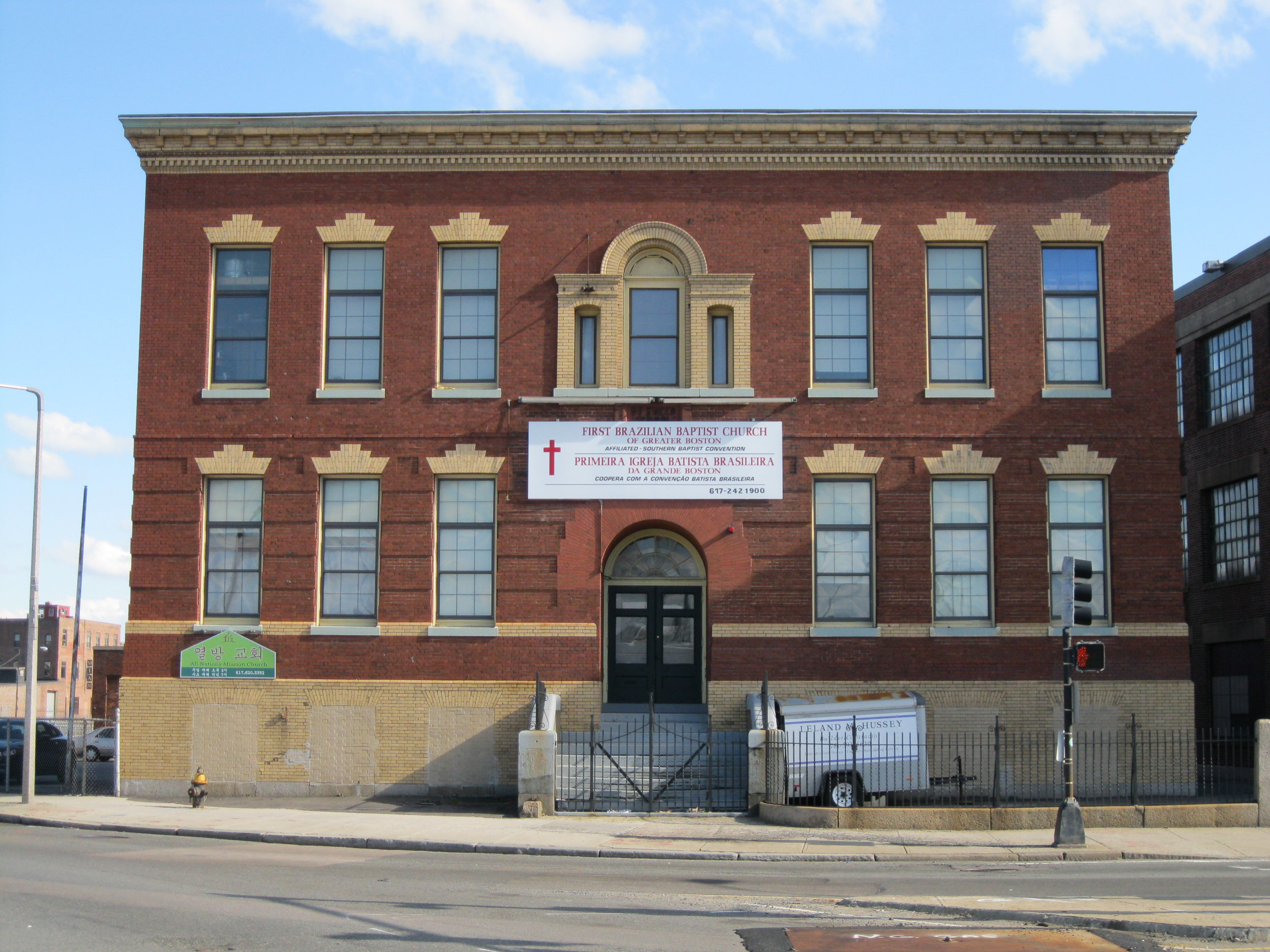
History and Contemporary Context
The history of Brazilian churches in Boston is very much shaped by the context of Brazil. Historically, the dominant religion in Brazil is Catholicism, which was the religion of the Portuguese settlers (Juergensmeyer & Roof, 2012). However, fewer people in Brazil today report being Catholic than in previous generations. Whereas more than 90% of Brazilians reported being Catholic as recently as 1970, 65% reported being Catholic in the 2010 census (PEW, 2013).*
The largest Pentecostal church group in Brazil is the Assemblies of God (Assembleias de Deus) with more than 23 million members (Johnson & Zurlo, 2016). Spiritualist religions, which emphasize reincarnation and communication with the spirits of the dead, are also common. More recently, Protestantism―especially Pentecostalism―has had a major impact with 22% reporting being Protestant as of 2010 (Pew, 2013). The earlier Protestant influence was a result of missionary work and church planting, but most of the major Protestant denominations now have an indigenous presence in the country (Freston, 1999) and today’s Brazilian Protestant church is strikingly indigenous.
Pentecostals in Brazil resist typology because of their rapid growth and diversity. The historical Pentecostals (primarily those growing out of missionary endeavors such as those by the Foursquare Church) emphasize the Holy Spirit, the Spirit’s manifestations in gifts, separation from the world, and a high behavioral code. NeoPentecostals such as participants in the Universal Church of the Kingdom of God, a denomination which was established in 1977, continue to emphasize the Holy Spirit, especially healing and exorcism, and make connections between Christianity, success, and happiness. NeoPentecostals may also move away from a separatist worldview and strict behavioral standards and toward increased cultural integration, and some emphasize prosperity rather than a central focus on Christ and the Bible (Juergensmeyer & Roof, 2012). The movement toward greater cultural integration has opened doors for political activity (Freston, 1999). There is debate however about whether NeoPentecostalism can be reliably distinguished from Pentecostalism (Gedeon Alencar, personal communication, 3 October 2015). Some also suggest that PostPentecostalism is the preferred term for those who operate in a way that is similar to a business, emphasize cultural integration, and bypass the traditional elements of Pentecostalism such as the “central focus on Christ and the Bible,” focusing instead on a prosperity gospel (Juergensmeyer & Roof, 2012, p. 159).
Pentecostals (including NeoPentecostals) comprise 85% of the Protestants in Brazil (Juergensmeyer & Roof, 2012). Five years following the 1906-1909 Azusa Street revivals, the rapid expansion of Pentecostalism reached Brazil through Swedish Baptist missionaries (Chesnut, 1997). Due to urbanization and the growth of the mass media (Freston, 1999), there was simultaneous growth among Pentecostals in the North (Belem) and Southeast (São Paulo) regions. Much of the recent growth in Brazil is accounted for by six denominations, three of which are of Brazilian origin: Brazil for Christ, God Is Love, and the Universal Church of the Kingdom of God (Freston, 1999).** The most rapid recent growth in Brazil among Pentecostals is due to growth in the Foursquare (or Quadrangular) Church, Brazil for Christ, and God Is Love (Juergensmeyer & Roof, 2012).
According to the IBGE Census, in 2010 there were almost 4 million Baptists in Brazil represented by the Brazilian Baptist Convention (affiliated with the U.S. Southern Baptist Convention) and the National Baptist Convention (Renewalist Baptists). In addition, Reformed churches were common such as the Presbyterian Church of Brazil, the Independent Presbyterian Church, and the Renewed Presbyterian Church. Adventists, Lutherans, and Wesleyans were also represented.
Baptists
According to Marques and Salum (2007), Pastor Joel Ferreira was the first Brazilian Minister to start a Portuguese-speaking church in New England. No interviewee knew of an earlier presence. Pastor Ferreira was a member of the National Baptist Church in Brazil and planted a Renewed Baptist Church in Fall River in the early 1980s that grew to about 500 members (Marques & Salum, 2007), also called the LusoAmerican Pentecostal Church. Pastor Joel returned to Brazil in 1991 and later returned to the U.S. where he recently died. Today there are several (perhaps 6-9) churches in Massachusetts that were born from this pioneer church.
Several renewal Baptist church groups exist in New England, including the Shalom Baptist International Community in Somerville led by Pr. Jay Moura and the Igreja Communidade Deus Vivo led by Pr. Aloisio Silva.
American Baptist Churches began a new church-planting movement in Boston in 1991 and planted primarily renewal churches (Marques & Salum, 2007). This movement gained force from 2001 to 2004 when about 20 new Brazilian Portuguese churches were planted in Massachusetts and Rhode Island under the New Church Planting Coordination led by Rev. Lilliana DaValle and Pr. Josimar Salum. This forward movement stalled due to issues of church doctrine. Another group of churches that were established with Baptist connections are the Vida Nova churches including Igreja Batista Vida Nova in Medford (Pr. Jose Faria Costa Jr) and Igreja Batista Vida Nova (Pr. Alexandre Silva).
The Southern Baptists also planted many churches since 1995. There are about 30 of these churches in New England, including the Portuguese Baptist Church in Inman Square, Cambridge (Pr. Silvio Santos), the Celebration Church in Saugus (which was in Malden and Charleston under the direction of church planter Pr. Joe Souza), and the First Brazilian Baptist Church of Greater Boston (also known as the Lovely Church) with Pr. Antonio Marques Ferreira.

Assemblies of God
The first Assembly of God churches in Boston were established by Ouriel de Jesus. He was invited by Pr. Alvacir Marcondes to Somerville in 1985, and under his supervision the Assemblies of God denomination in the U.S. experienced tremendous growth. After September of 2001, Pastor de Jesus said he received a message from God to lead a great revival and began holding revival meetings all over the country and world. Currently, he is the pastor of the World Revival Church in Everett, which now has over 70 congregations throughout the U.S. and in 17 other countries with a membership exceeding 15,000.
Despite Pr. Ouriel’s success at leading revivals and church growth movements, his ministry has been accompanied by a great deal of controversy. As a result, in 2002, the church was expelled from the Assemblies of God denomination in both the U.S. and Brazil. The mother church and those he planted are no longer allowed to call themselves Assemblies of God and instead have taken the name The World Revival Church, later adding “Boston Ministries” (Pinto-Maura & Johnson, 2008). These churches continue to exist under Ouriel’s leadership.
There are 36 Brazilian Assemblies of God churches in Massachusetts, including Igreja Vida Assemblies of God (Pr. Salmon Silva) and Mission Assembly of God (Pr. Joel Assis).
Presbyterians

Several Presbyterian churches are in the Boston area. Christ the King church in Cambridge was established in the early 1980s by Pr. Osni Ferreira, who had a multicultural vision. Several additional Brazilian Presbyterian churches have been planted by this church, including New Life Presbyterian (Framingham), Bethel (Marlboro), and Christ the King (East Boston).
Church of Christ
In 1984, the Church of Christ established the Hisportic Christian Mission (HCM) in East Providence, Rhode Island, led by Rev. Wayne Long with the vision to reach Portuguese-speaking people in New England (Hisportic stands for Portuguese as Hispanic stands for Spanish). In 1990/1991 Rev. Aristones Freitas and Josimar Salum planted the first Brazilian Church in Worcester, Mass. Today there are about 46 churches that have been established through the HCM, of which 26 are in Mass., an additional 10 are in other New England states, and three are in Brazil.
Independent churches. The Foursquare Gospel Church arrived in 1991 and now has several churches throughout New England. These include the Communidade Brazileiro of Framingham, PenteBaptist (Pr. Dimitri Grant) and Malden Portuguese Foursquare Church (Pr. Cairo Marques).
Strengths and Opportunities for the Brazilian Churches in Boston and New England

Strengths
The strengths of the Brazilian churches are many. Some churches have numerous young people, many pastors are committed to preaching the Gospel, and large numbers of lay people who fill these churches take seriously their responsibility to know the Bible and to serve Christ. Brazilians as a group are well-accepted in the community. We heard stories which indicate that this is not always true for individuals, particularly with regard to immigration, but we also saw newspaper articles extolling the benefits that Brazilian churches have brought to the community! Brazilian churches can and often do reach out to contribute to their larger communities.
Nevertheless, there are many challenges, including the language barrier, how immigrants can participate in the larger culture and retain their Brazilian culture, immigration issues, and high levels of turnover among church attendees, in part because of immigration. In a series of interviews conducted in 2015, virtually everyone mentioned the challenge of finding affordable meeting space. Many churches do not have their own buildings, and, if they do, they struggle to maintain them. Renting space is increasingly expensive, and there are often problems parking near urban churches. Difficulties surrounding meeting together, an essential aspect of being a church, results in significant stress in the community.
These churches have other struggles as well. Converting new people to Christ is often hard. There is a need to raise up new pastors, because many pastors have been in the U.S. for several decades. It can be difficult to recruit young people to such a challenging ministry and one focused specifically on the Brazilian community.
Some challenges come from outside the churches and others from within. Networking among Brazilian pastors is challenging even though there are some groups that meet regularly, including BMNET (Brazilian Ministers Network), Brazilian Prayer Network of Boston, and Pastors Fraternal Union in Fall River. When asked during an interview to name the single thing that would be most helpful to them, pastors frequently said that they would like better contact with other Brazilian pastors. Nevertheless, multiple factors can limit opportunities for networking:
- Journeyman pastors work a full-time job in addition to pastoring and lack time for networking.
- Instability in church membership as members return to Brazil contributes to pastor overload and burnout.
- Pastors may compete among themselves for church members.
- The needs of first, second, and third generation immigrants are difficult to navigate. For example, churches struggle with whether to have services in English or maintain evening services as in Brazil versus the American way of holding morning services.
Opportunities
The opportunities for growth and change are many. Among them are these:
The Brazilian population in Massachusetts is estimated by the 2005 census to be approximately 84,000 individuals, many of whom are not in church. There is great potential for church growth within (and outside) the Brazilian population.
Brazilian churches can get more involved with the local and global realities, e.g., by supporting other church efforts such as limiting human trafficking.
They can perhaps better educate their members about the problems with the prosperity gospel, and the financial abuses that are too often perpetrated against church members (including the Ponzi scheme called Telex Free in which some pastors participated).
They need to strategize for the future, as more and more of their members speak English and either ask for changes in Brazilian churches, or leave for English-speaking churches.
The Brazilian churches have much to teach the larger community. Church planting appears to be a primary focus for Brazilian Christians and virtually every church visited had either already engaged in church planting or hoped to at some point. Many churches also feel called to send out missionaries. Even though we were unable to get an estimate of the number of missionaries commissioned, anecdotal evidence suggests that there are surprisingly many missionaries from these churches. And finally, at least one of these churches feels called to minister not just in their local community but around the world. In a church community that was itself not financially flush, the church has supported orphanages in Brazil and dug a much needed well in a needy community without a church, while also supporting ministries in Africa. This level of commitment is remarkable and challenging to mainstream American churches.
In conclusion, the size, energy, number of young people, and commitment to church growth in Brazilian churches should inspire the Global Church. The needs are great, and the opportunities are many for serving those engaged in these impressive churches and for ministering together in the larger community.
Endnotes
*Johnson and Zurlo (2016) report approximately 76% Catholics and 28% Protestant. These numbers refer to the percentage of all Brazilians and demonstrate that some Brazilians claim dual affiliation or membership in more than one community of believers. By their estimate, the number of dually affiliated believers is 13% of Brazilians, many of whom claim to be both Protestant and Catholic. Their estimate is based on an effort to provide a more precise estimate than the 2010 census, in part by collecting information from additional sources than the census and in part by allowing individuals to report belonging to more than one religion.
**The remaining three churches are the Assemblies of God, the Four-Square Church, and the Christian Congregation (Freston, 1999).
References
Boston Redevelopment Authority. (2012). New Bostonians 2012. BRA Research Division Analysis.
Chesnut, R. A. (1997). Born Again in Brazil: The Pentecostal Boom in Brazil: The Pentecostal Book and the Pathogens of Poverty. New Brunswick: Rutgers University Press.
Freston, Pl. (Jan-Mar, 1999). “Neo-Pentecostalism in Brazil: Problems of Definition and the Struggle for Hegemony.” Archives de sciences sociales des religions. 44E, No 105, p. 145-162.
IBGE (Institute Brazileiro de Geografia e Estatistica) (2010). Census. http://censo2010.ibge.gov.br/en/ censo-2010 Accessed 6.27.2015.
Johnson, T. M., & Zurlo, G. A. (Eds.) (2016) World Christian Database. Leiden/Boston: Brill. Accessed at worldchristiandatabase.org/wcd on 1 January 2016.
Juergensmeyer, M., & Roof, W. C. (Eds.) (2012). Encyclopedia of Global Religion. Thousand Oaks, CA: Sage Publications.
Marques, C., & Salum, J. (2007). The Church among Brazilians in New England. In R. Mitchell & B. Corcoran (Eds.), New England’s Book of Acts. Boston: Emmanuel Gospel Center.
Pew Research Center (2013). Brazil’s Changing Religious Landscape. http://www.pewforum.org/2013/07/18/brazils-changing-religious-landscape/ Accessed 6.28.2015.
Pinto-Maura, R., & Johnson, R. (2008). Abused God. Maitland FL: Xulon Press.
U.S. Census (2009). ActivitiesUpdate_June09. Accessed on 8.2.2015 from http:// www.henrietta.org/index.php/doccenter/2010-us-census-documents/6-june-2009-census-2010-activities-update/file
This essay updates the story of the Brazilian Church in Greater Boston as told in New England’s Book of Acts (2007), originally published by the Emmanuel Gospel Center in preparation for the October 2007 Intercultural Leadership Consultation. The earlier version was written by Cairo Marques and Josimar Salum, and work on the current document began by talking with them as well as 45 other Brazilian pastors and lay people in the Greater Boston community. Their observations are integrated into the comments above. —Kaye Cook and Sharon Ketcham, February 24, 2016.
__________
See the original 2007 article on the origins of the Brazilian church movement in New England in New England’s Book of Acts.


![Hidden Treasures: Celebrating Refugee Stories [photojournal]](https://images.squarespace-cdn.com/content/v1/57ff1c7ae58c62d6f84ba841/1512579164575-AKNVCYX4Q5DW8IN2CNYP/P1070998.jpg)


The Process of the Gospel
The Process of the Gospel is not a program, but a model for building relationships that nurture effective, incarnational ministry, helping people experience the presence and power of Jesus Christ for themselves. By internalizing this process, Christians can be involved in loving people in some of the same ways that Jesus modeled for us in the Gospels.
The Process of the Gospel
A Relational Foundation for Doing God's Work God's Way
by Doug Hall
It is an inestimable privilege for me to “do God’s work” and to be a “fellow worker” (1 Cor 3:9) with God.[1] This high calling makes me very nervous, however, because I take doing God’s work very seriously, and I have always carried within me a deep fear of being counterproductive.
Over the years, I have come to see that this fear has been beneficial, because it has motivated me to seek God more, and has allowed me to become involved in very fruitful, multiply productive ministry.
One way of being hugely counterproductive is to do ministry in a programmatic manner. I am very convinced that ministry must not be carried out programmatically but rather through genuine relationships. The Process of the Gospel is not a program but a relational tool for doing God’s work. It creates a relational foundation for very effective ministry that will be multiply productive rather than counterproductive.
Earlier this summer, we took students from our Doctor of Ministry class on a tour of ministries in Greater Boston.[2] We picked ministries that we felt demonstrated integrity, long-term practice, fruitfulness, and cooperative participation across the Body of Christ. On our visits, I heard each ministry leader cite relationships as the most critical factor in their overall success.
Indeed, working through relationships is one of the primary ways God goes about his work. The Bible tells about one relationship after another that God established with individuals, families, cities, and nations. God’s work of redemption requires that his message be planted among us, understood by us, and that it grow and bear fruit. This all comes through relationship.
We know this is true, but I want to understand how God does it.
What actions does he use to create relationships with his fallen children?
How does he introduce, communicate, and affirm his message?
And then, how does he go about planting his message in our hearts and nurturing that message to maturity?
I believe that if we can get a handle on how God does his work, maybe we can learn to do our work in the same way. And if we learn to do things the way he does, I believe there is a stronger likelihood that our work as ministers of the Gospel will bear the fruit God desires to see.
Process of the Gospel in the Bible
Consider what Jesus did during his ministry on earth and how he communicated the Father’s message to us. In other words, what is the process he used to bring us the Gospel?
I identify six stages of the Process of the Gospel:
Observation
Positive Appreciation
Relevant Communication
Meeting Perceived Needs
Meeting Basic Needs
Multiplication
Here is what God did:
God observed his fallen creation. Our sin condemned us to death. We were eternally lost without him.
Because he knows us and loves us (positive appreciation) he sent his Son who communicated relevantly through his life, his parables, and teaching.
When Jesus walked among us, he identified and met our perceived needs with miracles, as he meets our needs today, and then he met our basic, core need through the atoning work of his death and resurrection.
Finally, he prepared his disciples for his leaving, laying the groundwork for the multiplication of his Kingdom through his church, made possible through the coming of the Holy Spirit.
These stages describe a pattern that God has designed to allow the power of redemption, working in and through living systems, to grow his Kingdom.
By definition, a living system is an orderly, highly complex, and highly interrelated arrangement of living components that work together to accomplish a high-level goal when in proper relationship to each other.[3] When people come together, living systems like families, churches, cities, and nations are formed.
Because the Process of the Gospel helps us to align with and engage God’s living systems, it can be used not only for ministry with individuals, but with larger social systems, such as a local church or an entire city.
This cycle can be repeated many times in ever-widening realms of influence, from an individual person to a neighborhood or a local community of faithful people, to the community of faith in an entire city, to many cities working together. It works in one-on-one relationships, in ministry development, in cross-cultural missions, in church planting, and in community organizing. With it, one can reach the poor and the rich. It can work in both sacred and secular settings. It can and has transformed entire cities and has allowed Christianity to grow throughout the world.
I call this six-stage pattern an archetype because these elements work together as a unit, an entire process that follows an enduring, stable pattern or model that transcends time and space across all human history.
For almost five decades through our work in Boston with the Emmanuel Gospel Center,[4] we have found countless opportunities to use this approach, and it has helped us to avoid counterproductivity while consistently producing long-lasting fruit for the Kingdom of God.
The fruit we have seen God bring during this time is not insignificant. We have been privileged to experience an incredible revival in Boston that we call the Quiet Revival. In four decades, the number of churches in Boston has nearly doubled, from approximately 300 in 1970 to 575 in 2010. Also, the estimated percentage of the city’s population in churches has increased from about 3% to about 14% and has demonstrated many of the characteristics of healthy growth, including increased unity and prayer, trained leadership, and effective ministry that produces significant social change. [5]
It is an exciting place to be at work in God’s Kingdom, and it is from this context of vibrant and sustained growth of Christianity that I write today. Let me first share with you how I stumbled across this pattern.
Discovery
The Process of the Gospel evolved out of suggestions originally intended for short-term student participants in urban ministry. To guide the students in properly relating to people in the community, I reflected on what had worked well for Judy and me in the past.
Several basic characteristics of our relationships with our neighbors surfaced over and over again and I wrote a short teaching paper to help my students navigate relationships with our urban neighbors. It eventually became evident that the relational approach we suggested to these students was the pattern Jesus had followed in his ministry. Therefore, in using it, we would be doing what Jesus did. The “Process of the Gospel” was born as I realized that what I had originally penned as “steps to short-term involvement” was really something deeper.
Because living systems are at issue, readers must resist the temptation to take the easy way out, to try to make the Process of the Gospel into a program, rather than allow it to become an integral part of who they are. Those who make it into a program will be missing the point entirely, and missing the opportunity for fruitfulness, which is the goal.
Defining “Process”
A simple definition of process would be “a series of actions directed to some end.” Although that captures the heart of it, I see it as so much more. It is important to make the distinction between process and procedure as we are not talking about a new procedure for ministry, but an age-old process.
I view procedures as isolated steps we need to do in order to complete a task in a systematic, orderly way. Process is different. The goal of process is not merely to complete some isolated task but to see transformation or change in something, to move toward a desired outcome that is much bigger than ourselves and is beyond our control.
While procedures are people-driven, processes are driven by the larger living systems we engage. For example, to grow tomatoes, we work within the rules and powerful forces that already exist in the environment, including the weather, the presence or absence of pests or diseases, the need for nutrients in the soil, and so on. We might follow certain procedures for growing tomatoes, but the actual process is very complex, and the result of all we do is really up to God.[6]
The same holds true for the Process of the Gospel. As Paul says in 1 Corinthians, “I planted the seed, Apollos watered it, but God made it grow” (1 Cor 3:6). So it is never about how well we follow the steps and do the task. Rather, it is about how well we work with the complex and interrelated processes God has already put in place. He is the Author of all life and the Lord of all living systems. In the end, he will get all the glory for all he has done.
Stage One: OBSERVATION
I love the city. I love to be in an inner-city neighborhood with all the people sitting on their stoops, the children in the playground, the youth playing baseball, the neighborhoods that seem filled with baby carriages, poor people, or elderly folk. My city has a pulse, and I feel it beating.
The highest levels of observation are required to perceive social systems, large or small, as living realities. When we are able to do this, we do not simply see streets and buildings, but a complex social organism called Boston, Philadelphia, or New York, for example.
The Old Testament prophets addressed entire cities and countries as though they had the characteristics of a living person. New Testament writers wrote to cities as though each city, represented by its one church, were persons who could receive a letter.[7] They understood the “body of Christ” and the “Kingdom of God” as living systems.
God himself models this skill of observation for us. Moses wrote, “God looked on the Israelites and was concerned about them” (Exod 2:25). God’s compassionate observation of the children of Israel in slavery under Pharaoh moved him to action.
“Observation is a humble skill. Anyone can do it. No college degrees are needed. But it challenges the greatest intellect to assimilate and make sense of what one sees.”
God's observation is very thorough. Is there anything about us he does not see? The writer of Hebrews says no. “Nothing in all creation is hidden from God’s sight. Everything is uncovered and laid bare before the eyes of him to whom we must give account” (Heb 4:13). He knows every intimate detail about us. “And even the very hairs of your head are all numbered” (Matt 10:30). He knows what we are thinking now and what we are going to think later. “Before a word is on my tongue you, Lord, know it completely” (Psalm 139:4).
After Jesus was born in Bethlehem, a full thirty years went by before he began his ministry. What was he doing for thirty years? We know little about those days, but we can be sure he was observing and learning about the people who lived in Nazareth and the surrounding region. Most of Jesus’ earthly life was lived in the critical observation stage, through which his Father was preparing him for the day when he would begin to proclaim the Kingdom of God.
Observation is a humble skill. Anyone can do it. No college degrees are needed. But it challenges the greatest intellect to assimilate and make sense of what one sees. We study the situation. We try to see real people in the way they really operate. We pray, “Lord, give us eyes to see!” And here, of course, we are not merely asking for physical eyes but for deep insights, revelations, intuitive understanding, and subconscious vision.
Since the mid-1970s, the Emmanuel Gospel Center has had a full-time researcher on staff. Over these many years, Rudy Mitchell has gathered information on Boston’s neighborhoods and churches to help us see and understand what God is doing in our city. Not only has our research informed our own ministry decisions, but we share what we learn with others to help them make wise decisions about their ministry objectives.
Today, a lot of our research incorporates team learning. By engaging others in the learning process, we work with the community to deepen everyone’s understanding of the issues, obtain new information, clearly articulate the issues, and assist those affected to develop and implement an appropriate response.[8]
The conversations that emerge from this observation and research process lead everyone involved to deeper understandings and positive appreciation of the people and issues involved. This paves the way for practical responses that make sense both to those seeking to serve and those being served.
No matter where you find yourself in ministry, become a learner. Humble yourself to be open to what God will teach you as you look around. We do not start by doing. We start by observing. Take the time to do the research.
The deep understanding we gain from keen observation will naturally flow into the next stage of the Process of the Gospel, a positive appreciation of the people around us and their unique environment.
Stage Two: POSITIVE APPRECIATION
The second stage, positive appreciation, means making room in our hearts to respect honestly and actively and care about people and their potentially foreign cultural context.
There is a marked difference between respecting people for who they are and helping people merely because they have needs. In fact, if you jump in to help people because they have needs, without respecting and loving them first, you may be accomplishing nothing at all. Is that not what the Apostle Paul meant when he wrote, “If I give all I possess to the poor and surrender my body to the flames, but have not love, I gain nothing” (1 Cor 13:3)?
If our relationship with someone is not based on affection that emerges from esteem, but is only built on our ability to give some service or thing to the receiver, there is danger that the relationship is paternalistic and dehumanizing. That kind of relationship produces short-term results or dependency or both, but not spiritual fruit.
So, the rule of thumb is this: until you can first honestly appreciate people, do not try to reach them with your message or your acts of service.
Our model for positive appreciation is God himself. God’s unthinkably huge sacrifice, the selfless death of Jesus on our behalf, flows from his perfect love for us. Jesus expressed immense positive appreciation of people. He wept over them as “sheep without a shepherd” (Matt 9:36). John said of the Cross, “Having loved his own, he showed them the full extent of his love” (John 13:1).
The person or group we want to engage may not be willing to engage, either because of fear, hostility, ignorance, brokenness, lack of self esteem, or some other obstacle. Positive appreciation is not necessarily reciprocal at this point, nor does it need to be. Jesus loved us and died for us while we were yet sinners (1 John 4:19). His giving did not depend on our positive response to him.
If we really care about people, they will sense that, and even when we make mistakes—for we will make them—they will forgive us because they know we care about them. We will offend and be offended; we will misunderstand; we will act defensively, prejudicially, or chauvinistically. But most people will eventually forgive us if they know we have a genuine love for them. As the Apostle Peter says, “Above all, love each other deeply, because love covers over a multitude of sins” (1 Peter 4:8).
Positive appreciation may not come easily. But the more we practice it, the more it is going to be perfected in us, though there will always be a huge gap between the way God loves and the way we love. This gap is a reality, not a problem. This is what the fallen world is about.
As we walk through the stages of the Process of the Gospel, we must always keep in mind that we are in a redemptive process, we are always confessing sin and always submitting to God, who will show us what to do.
Stage Three: RELEVANT COMMUNICATION
I think the real goal of relevant communication is congruence—that what you think you are saying is what the other person is actually understanding you to be saying; and that what you are hearing is what the other person is really intending for you to hear.
Relevant communication creates a deep connection between people. Your words will connect first to the matter at hand, but also to the heart of the listener. What you say will be practical and applicable. Your listener will have a sense of inner satisfaction that he or she is being heard, because what you say is congruent with their needs, their interests, their requests, and their worldview. At the same time, we carefully listen, hear, and receive from them.
God communicates through his “Word,” Jesus Christ. The writer of Hebrews makes this point clearly: “In the past God spoke to our ancestors through the prophets at many times and in various ways, but in these last days he has spoken to us by his Son” (Heb 1:1-2). God spoke all of creation into being, and Job says, “God’s voice thunders” (Job 37:5a). When God spoke to Elijah, however, he spoke in a “still small voice” (1 Kings 19:12). Our God is a God who speaks! And he is also a God who hears our cry, who is closer than a brother, whose Spirit intercedes and groans inexpressible words within us (Rom 8:26,27).
From the beginning of our time in Boston, we would often have people living with us, whether they were people from the streets, ministry students, or fellow workers. The street people who lived with us taught us to be clear in what we said, because they were looking for honest love, and if we said something we did not mean from our hearts, they would pick it up immediately.
They were our textbooks on developing integrity and transparency. If we said we would do something we really did not plan to do, we would see their hopes crushed, and distrust would creep back into their eyes. Many of the people we met had been injured in multiple ways, and trust was not easy for them.
Relevant communication goes beyond words. It goes into the depths of who we really are and how we are communicating who we are. Communication also involves nonverbal cues such as hand gestures and a listening posture. Relevant communication means knowing what people are saying and, to a degree, what they are thinking, and then carefully using stories and other ways to communicate clearly.
Are we listening well enough so that what we hear is really what people are intending to say? Are we speaking carefully, so that what we are saying is really what we intend to say, and our listeners are hearing what we intend them to hear?
Stage Four: MEETING PERCEIVED NEEDS
The Gospels are full of stories about Jesus meeting the perceived needs of the people around him.
You know the story of blind Bartimaeus. When at last he stood before Jesus, the Lord did something very unexpected. He looked at him and asked what seemed to be an odd question: “What do you want me to do for you?” The man was obviously blind! But it was important for Bartimaeus to verbalize his own perceived need. Jesus waited for relevant communication that revealed the man’s own perceived need before he took action.
Bartimaeus was very clear about what he wanted. “Rabbi, I want to see,” he said.
“Go,” said Jesus, “your faith has healed you.” Immediately he received his sight and followed Jesus along the road” (Mark 10:46-52).
Jesus came to provide the answer for our most basic need, that we would be redeemed from sin and death, but on his three-year journey to the Cross he responded to many, many perceived needs that people were concerned about. The Gospel is not only what Jesus said, it is what he did.
God has created us to help others. Paul says, “For we are God’s handiwork, created in Christ Jesus to do good works, which God prepared in advance for us to do” (Eph 2:10).
Why does Paul say we are created to do good works? Surely it is not to earn our place in heaven. That work has been accomplished on the Cross. Jesus said, “Let your light shine before others, that they may see your good deeds and glorify your Father in heaven” (Matt 5:16).
In a very real way, our good deeds, prompted by love, are the Gospel message, without words. We do the Gospel. At the same time, of course, we preach the Gospel using words. God has given us his special revelation, and he wants everyone to hear and know what he has to say to us.
The point is, we want the way we live to speak as loudly as our words. Meeting felt needs is an important step, because it is incarnational ministry. For the recipient, it is spiritual reality experienced through practicality.
“Suppose a brother or a sister is without clothes and daily food. If one of you says to them, ‘Go in peace; keep warm and well fed,’ but does nothing about their physical needs, what good is it? In the same way, faith by itself, if it is not accompanied by action, is dead” (James 2:15). James makes it clear that our words are not enough, and actions, including helping to meet perceived needs, spring from faith.
Those of us in ministry are always faced with the immensity of human need all around us. There is no escape from the press of need, and knowing that Jesus is the answer to all our problems, we want to help in his name.
When Judy and I first came to Boston, we felt our lives were coming apart because of the craziness of trying to respond to the needs around us. Judy clearly remembers how busy we would be meeting the needs of just one person: taking her to the outpatient clinic, to the grocery store, to the social security office, to apply for food stamps and fuel assistance, to the welfare office, typing up forms and applications for her, and helping her deal with her addiction and relational problems. And that was just one of scores of people at our door every day of the week.
Here are a few things we learned along the way:
1. Be realistic.
After carefully listening to what the person or group say they need, it is best to choose a need that can actually be met. For especially those people who have lost hope many times, we cannot afford to make promises we cannot keep.
Choose something you have every reason to believe you may be able to accomplish with and through their participation, and then pull out all the stops to make sure it happens.
2. Be collaborative.
Make room for the person or group to fully participate in meeting the need. This should not be a giveaway program. Their participation in the process will build their confidence and ownership of the solution.
Change must come from within, not from without. It is through helping to address a felt need that hope is built in people, and that hope will help them begin to surface their more basic, core needs.
Stage Five: MEETING BASIC NEEDS
When we move from meeting perceived needs to meeting basic needs, you may think that this is no big deal—that we just go from a focus on surface needs to deeper needs. But in reality, a seismic shift takes place as we move between these two.
If you miss the importance of this transition, you will miss the power that comes from the Process of the Gospel. Your ministry may very well stay on the surface, and you may not see the abundant life you want to see take root and grow in the life of your friend.
Here is the best way to tell the difference. Perceived needs are identified by tangible solutions where the meeting of the need is finite. The solution does not internally transform the person, though it certainly brings a measure of hope and relief. The change is additive.
But on the other hand, you know basic needs are met when the solution brings an ever-widening range of other needs also being met simultaneously and spontaneously. There is an explosion of life as one door after another opens in the person’s life. The change is multiplicative.
When, for example, a long-term alcoholic becomes sober, a whole series of needs begins to be met at the same time. These may be physical needs, employment, family issues, a sense of self-worth and value, and gaining a purposeful life.
In meeting basic needs, the transaction is between God and the individual, and unless the individual participates with God in his or her restoration through willingness, obedience, and depending on God, nothing of any lasting significance happens.
We cannot force this. We cannot make it happen. God must do the heavy lifting. “Unless the Lord builds the house, the builders labor in vain,” Solomon wrote (Psalm 127:1). My role is to support and nurture the individual, and make sure he or she is connecting to the broader body of Christ as God is at work doing things I cannot do, and as he brings redemption and restoration.
The basic need is only fully met when my new believer friend is nurtured within a new family of supportive believers that is part of the larger extended family of the body of Christ. Nurturing these family relationships is a good way to “engage God’s living systems” and is the heart of Living System Ministry.
There are some basic needs common to all humankind that have arisen because of the Fall, such as sinfulness, our fallen human nature, separation from God, and rebellion against him. Paul puts this matter very strongly. “Once you were alienated from God and were enemies in your minds because of your evil behavior” (Col 1:21). Our most universal, core spiritual need, then, is for reconciliation with our Creator and the subsequent transformation of our sin nature.
We might think that the end goal of the Process of the Gospel is to see someone come to faith in Christ. But there is one more step beyond that. The sixth stage of the Process of the Gospel is multiplication.
Stage Six: MULTIPLICATION
Living systems thrive on their own as they receive the sustenance they need.
Judy remembers that when our baby daughter was just two months old, a friend said to her, “Rebecca seems to be thriving!” Judy was beaming, very proud to be a new, successfully nursing mother. “And you probably did not have a thing to do with it!” he concluded, with a laugh.
This took the wind out of her sails, until she realized our friend was really saying that our daughter was experiencing the natural tendency of living things to thrive when they receive normal care and sustenance. Naturally, there came a time when Rebecca moved out to be on her own and a time when our son, Ken, left home to start a family of his own.
This is a normal part of nurturing a living system. We expect to release maturing systems to grow apart from us. Multiplication in an organic system requires that we let go.
Must I empty myself of short-term goals and focus on long-term goals? Must I release the future into the hands of other people when it is easier to organize and do it myself with my group in my way? These things are hard to do but they are necessary. We must empty ourselves of the short-term goals and individualism, both of which will hinder multiplication.
In multiplication, we want to envision those we have walked beside to do the “greater things” that Jesus talks about in John 14. “Very truly I tell you, whoever believes in me will do the works I have been doing, and they will do even greater things than these, because I am going to the Father” (John 14:12).
A goal in this is leaving in such a way that life flows from the people that we are working with, so they start reaching people we could never reach. Then we have been a part of a birthing process. We want to make disciples who will make disciples.
As we follow the Process of the Gospel, we will, indeed, participate with God in the way he builds his Kingdom. We experience what it means to be a co-laborer with God!
Completing the Circle
We started out wondering how God goes about creating relationships with us, planting the message of the Gospel in our hearts and nurturing it to fruitfulness. Now, as we have come full circle, the effective engagement we sought for is complete. “The fruit that remains” is the goal, and multiplication is the fruit. The recipient now becomes the giver.
The point of Jesus’ death and resurrection was to redeem a lost people who will then actually and zealously join him in his work. This is the Gospel: “Who gave himself for us, that he might redeem us from all iniquity, and purify unto himself a peculiar people, zealous of good works” (Titus 2:14). Yet, even now, multiplication points us back to where we started.
Because the Gospel is alive, this living cycle of redemption starts up again in ever-widening circles.
From multiplication to system-wide balance
The Process of the Gospel restores relational balance to society. Rather than drawing from flawed or self-serving institutions which rely on technological, financial, intellectual, or organizational capital, the Process of the Gospel both draws from and builds up what I call “relational capital.”
While the Process of the Gospel effectively meets real human needs on every level, this process is not needs-based, but asset-driven,[9] because
it works out from a positive appreciation of everyone involved
liberally uses the assets that flow from healthy living systems
throughout the process, develops reservoirs of internal relational capital that nurture the growth and development of living systems
This article was previously published in Missio Dei: A Journal of Missional Theology and Praxis 3, no. 2 (August 2012).


REFERENCES
[1] Scripture quotations in this paper, unless otherwise indicated, are taken from the HOLY BIBLE, NEW INTERNATIONAL VERSION®. Copyright © 1973, 1978, 1984 Biblica. Used by permission of Zondervan. All rights reserved.
[2] This course is offered through Gordon-Conwell Theological Seminary: http://www.gordonconwell.edu/doctor-ministry/Urban-Ministry.cfm
[3] We introduce the idea of living system ministry in our book, The Cat and the Toaster. Hall, Douglas, Judy Hall, and Steve Daman. The Cat and the Toaster: Living System Ministry in a Technological Age. Eugene, OR: Wipf & Stock, 2010.
[4] For more on the Emmanuel Gospel Center (EGC), visit www.egc.org. Judy and I started serving at EGC in 1964.
[5] Based on analysis of data gathered by the Emmanuel Gospel Center, Boston.
[6] Isaiah 26:12 says, “Lord, you establish peace for us; all that we have accomplished you have done for us.” (italics mine)
[7] For example, see 1 Co 1:2, “To the church of God in Corinth…”; Eph 1:1, “To the saints in Ephesus…”; Gal 3:1, “You foolish Galatians!” (here referring to a group identified by a geographical region).
[8] Learn more about EGC’s applied research
[9] For more on asset-based community development as compared to needs-based efforts, see, for example, the Asset-Based Community Development Institute. http://www.abcdinstitute.org/
Spiritual, Social and Systemic Conversion
Christians need to change. Sometimes that change is so radical, we could call it conversion. But how can those who have been converted be converted all over again? Here, Dr. Hall talks about three types of conversion, a spiritual, social, and systemic conversion. Using examples from his own life, he explains how each type of transformation was needed for him to do ministry effectively, and all three types of change were empowered by the redemption won by Jesus Christ on the cross.
Christians need to change. Sometimes that change is so radical, we could call it conversion. But how can those who have been converted be converted all over again? Here, Dr. Hall talks about three types of conversion, a spiritual, social, and systemic conversion. Using examples from his own life, he explains how each type of transformation was needed for him to do ministry effectively, and all three types of change were empowered by the redemption won by Jesus Christ on the cross.
by Dr. Doug Hall
September, 2009
Do the converted need conversion?
In the message to the Laodiceans in Revelation 3, it seems as though Christ is encouraging people who were already Christians to be converted! He is preaching redemption to the redeemed. Why would Jesus ask Christians to repent in such strong language? Why would he ask those he declares to be poor to “buy” something from him? And why would he tell Christians he is outside some door knocking to come in? This text is full of mystery!
I have just recently realized that I have had a wrong premise in writing this book. I kept asking myself, “How can the reader apply the material in this book?” And I have been expecting that the readers would first gain an intellectual grasp of the concepts and then apply that understanding to their life experiences.
But just the other day, a good friend, Dr. Bobby Bose, reminded me that it didn’t work that way for me. I didn’t begin my journey into living system ministry with intellectual understanding, so why should I expect you to find that as your entry point to a new level of ministry?
Then Bobby asked me, “How did you get converted to the way you do things?” What an interesting way to put it. As we talked, I realized that for me it really took a conversion experience, and I think this may be what is needed for you as well.
In the first few verses of his letter to Laodicea, Jesus calls the Laodicean Christians “poor, blind and miserable,” as though they had a need of redemption and needed to be saved. Next, he counsels them to buy gold, white clothes, and eye salve, symbolizing confession, forgiveness, and new life, also redemptive concepts. It sounds like he is saying that these saved people need redemption! Then he asks them to repent. Soon he is knocking outside the door of the Christian. Why is Christ outside the door of the believer’s heart? You would think this text would be about the unbeliever.
The fact that this seems to be a contradiction shows us that we are not conditioned to understand this text with the way we usually think about things as Western Christians. If we did understand it properly, not only would the seeming contradictions disappear, but also we would discover a different, higher level of understanding of God’s truth.
I think Christ is saying that although the Laodicean believers were converted and already redeemed, they needed to experience a fuller understanding of conversion and redemption. We are like that too. We have experienced one level of redemption, but there are other aspects that we have not experienced. I think Jesus is calling us to convert to full redemption.
As I talked with Bobby about how I had been converted to the way I do ministry, I thought about “three types” of conversion, and it seemed to me that I had undergone each one in some strategic experiences in my own life. Perhaps Jesus is calling us all to three conversions—a spiritual, social, and systemic conversion. Our initial spiritual conversion can give us some insight into how the other areas work.
I first experienced a vertical, spiritual conversion when I became a believer, a follower of Christ. Christians are familiar with spiritual conversion: a bending of our will to God, a calling out to him in repentance for forgiveness and cleansing from sin through a substitutionary atonement, and an acknowledgment that we want to begin walking through life with him.
Later, following my spiritual conversion, I needed and experienced a cultural (or perhaps I could call this a “social”) conversion from the limitations of my own culture to a love for other cultures. In this conversion, I found myself hungry to know about how the Gospel is expressed in other cultures.
A cultural or social conversion
We tend to get spiritual things and cultural things confused. This was true for me. Before I was a Christian, I was a Michigan Norwegian Lutheran. I believe that one of the reasons I was initially hindered from experiencing a real spiritual conversion as a young person was that I had confused what my actual faith was about with what my culture was telling me my faith should be. I finally realized that my culture reflected some things about my faith, but not enough for me to truly have a spiritual conversion. In time, I learned to parse the difference between what was my faith and what was my cultural expression of my faith. This gave me a hunger to discover how other cultures express the same biblical faith.
When I finally found the reality of my faith apart from my culture, and began to see new facets of Christianity expressed in other cultures, I wanted to learn more. I wanted to see the faith reflected in as many cultures as possible, with the belief that each culture could give me another important focus that I had not seen in my original culture. So, as an extension or continuation of my spiritual conversion experience, I also had a social conversion which caused me to see how different cultures were helpful in understanding my faith. No single culture was adequate to tell me all I needed to know about Christ. My own early experience was not in a first-generation immigrant, storefront church, but such churches taught me much about the spontaneous expansion of the faith that was possible in an urban environment. I am not Pentecostal, but Pentecostal Christian friends have taught me how to do my Christianity in a vital and fruitful way. I am not part of a holy order of some liturgical church, but many people who are in such orders have taught me how to see the poor as Jesus himself, how, as he explained it, when I do something for the least of these, I have done it to him. They teach me to see in new ways, to see that people are not to be seen as categorically poor, or addicts, or street people, but as Jesus himself.
This social conversion empties me of paternalism in ministry. I learned to maintain my own cultural identity but develop the ability to have a Process of the Gospel experience where I relevantly communicate and participate with people of other cultures in the meeting of their perceived and basic needs.
The list of other cultural groups who ministered to me and showed me a new way of looking at my faith can go on and on. Today, EGC interrelates with over 100 denominations and over 100 ethnic groups, and people who worship Jesus in 600 churches around Boston in 30 different languages. The Quiet Revival was an invisible movement of God, until we became socially converted to see it with the eyes of faith, and eventually identified it so we could talk about it and show it to others.
Yet, when I talk about cultural or social conversion, I think it will resonate with you because you have already experienced a conversion in the spiritual realm. Those of us in modern society need more than a spiritual conversion, the one that takes us to heaven. Because God’s redemptive design includes people who are not like us, people from every nation, language and tribe, we may need to be converted to the social aspect of God’s redemption.
A systemic conversion
In the course of my early ministry in the city, Judy and I began to experience a third type of conversion, a systemic conversion. A systemic conversion takes me beyond my personal spiritual redemption experience to learning how God’s redemption also extends to other aspects of life as well. On a micro scale, this means that Jesus is able through his redemptive power to supply healing of people’s bodies. On a macro scale, this means Jesus is able through his redemptive power to heal neighborhoods, communities, cities, and other large social systems. As Christ overcame sin through his victorious and sufficient death and resurrection, God is working out his redemptive plan right now to the ultimate end of bringing everything under the feet of Christ. And all this was made possible by the cross.
To confine redemptive activity to the spiritual realm is to miss the truth of Romans 8:22. “We know that the whole creation has been groaning as in the pains of childbirth right up to the present time.” Systemic conversion relates to our ability to embrace the whole created system—the spiritual, social, and physical dimensions of life. I believe it is in God’s heart to redeem our physical world and our social world, as he also provides spiritual redemption. We have to be careful not to elevate the spiritual above the physical. God created the physical world, and he is still a part of it. Christ was God and man, and he lived on earth in a social environment. God was not contaminated by sin from a physical body or by living in a social environment. The contamination came from sin, not earth. Our sin was placed upon him who was perfect, so he could pay the penalty of our sin.
My systemic conversion has really changed me and the way I think and the way I do ministry. I have moved from an organizational/technological thinking process to an organic thinking process that I find is more in tune with what God creates, rather than with what humans create. I begin to understand how social/spiritual realities—families, churches, ethnic systems, even the church universal—operate organically as complex, interrelated living systems, far above our normal understanding of organizational order. After we have experienced a systemic conversion, we can begin to see what scripture means when it speaks of the church as an organism. It is in organic ministry that we learn how to not only know truth, but to do it! Organizational Christianity cannot do truth, but organic Christianity can do truth. Seeing the organic nature of social systems shows us a higher level of very complex order that far exceeds organizational levels of order.
So back to the Laodiceans. The church in Laodicean was a mature church. While spiritual conversion had already taken place for the Laodiceans, making them believers, Christ wrote to them to say they needed more. I believe that Christians need total redemption that extends beyond our spiritual conversion and salvation experience if we are to be involved in the full redemptive activity that God is doing in our world today. His total redemption will ultimately produce not only individual believers destined for heaven, but a whole new heaven and a new earth in which we will eternally reside! The old things will pass away, and the new things, including the physical and social things, will be made new.
For more, check out Dr. Hall's 2010 book, The Cat & The Toaster, Living System Ministry in a Technological Age.
Keywords
- #ChurchToo
- 365 Campaign
- ARC Highlights
- ARC Services
- AbNet
- Abolition Network
- Action Guides
- Activism
- Administration
- Adoption
- Aggressive Procedures
- Andrew Tsou
- Annual Report
- Anti-Gun
- Anti-racism education
- Applied Research
- Applied Research and Consulting
- Asking for help
- Ayn DuVoisin
- Balance
- Battered Women
- Berlin
- Bianca Duemling
- Bias
- Biblical Leadership
- Biblical leadership
- Black Church
- Black Church Vitality Project
- Book Recommendations
- Book Reviews
- Book reviews
- Books
- Boston
- Boston 2030
- Boston Church Directory
- Boston Churches
- Boston Education Collaborative
- Boston General
- Boston Globe
- Boston History
- Boston Islamic Center
- Boston Neighborhoods
- Boston Public Schools
- Boston-Berlin
- Brainstorming
- Brazil
- Brazilian
- COVID-19
- CUME
- Cambodian








With limited meeting space in some of our cities, how do churches who practice their faith in different ways gather under the same roof and learn to love each other?